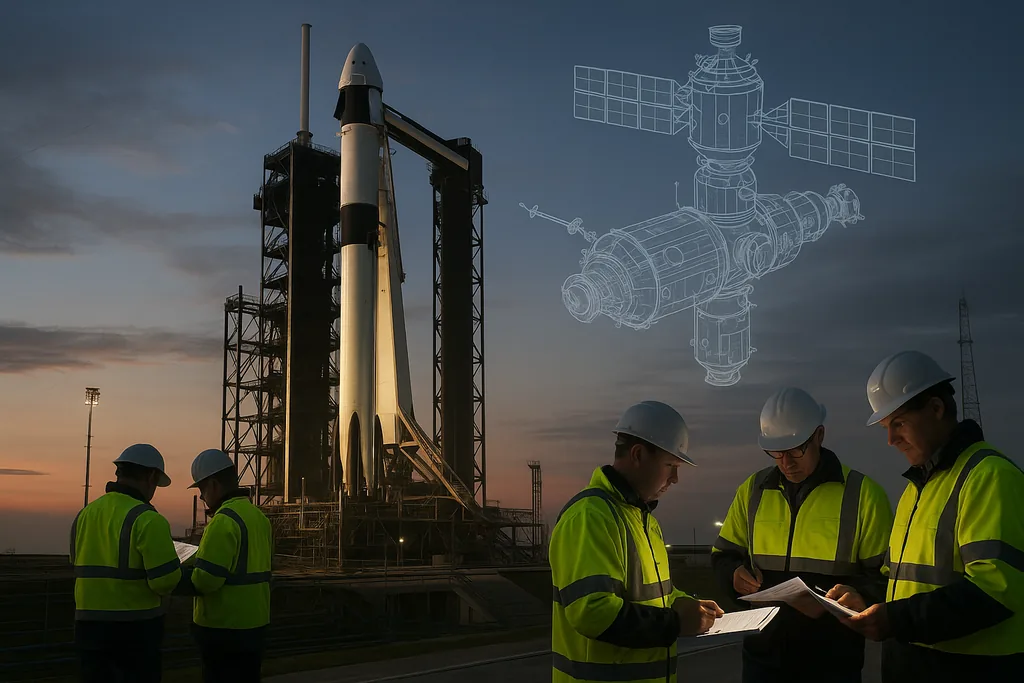
Launch scrubbed after a "new pressure signature" in Zvezda
On June 12, 2025, NASA announced that the launch of Axiom Space’s Ax-4 mission would be delayed while engineers evaluated a fresh pressure anomaly in the Zvezda service module of the International Space Station (ISS). The four-person private flight — commanded by former NASA astronaut Peggy Whitson and carrying astronauts from India, Poland and Hungary — had already been pushed back once after SpaceX engineers discovered a liquid-oxygen leak in the Falcon 9 booster. With the station segment still being evaluated and sealed following recent repairs, NASA and Axiom agreed that the prudent course was to stand down until managers from the partner agencies are satisfied the station can safely host additional visitors.
A chain of technical setbacks
The Ax-4 sequence underlined how tightly coupled launch schedules, vehicle health and on-orbit operations have become. SpaceX aborted the mission’s first planned attempt after a post–static-fire inspection of the Falcon 9 revealed a liquid-oxygen (LOx) leak in the booster; that event alone forced a short postponement while technicians repaired and retested the vehicle. Before teams could settle on a new pad date, cosmonauts on board the ISS reported what NASA described as a "new pressure signature" inside Zvezda—an aft Russian segment that has a documented history of small air leaks. Given the two unrelated hardware issues—one on the ground with the rocket and one on orbit with the station—mission managers chose to allow extra time for analysis rather than rush a launch window.
Zvezda’s history and the nature of pressure anomalies
Zvezda, the oldest habitable module on the ISS and a Russian-built workhorse launched in 2000, has long been the site of periodic pressurization problems. Small leaks are not unheard of on a complex multi-module outpost that has been continuously occupied for decades, and those events are generally addressed by a mix of local sealing, sensor checks and pressure-rate measurements. In this case, Roscosmos cosmonauts performed targeted sealing and leak checks and reported that the segment was holding pressure after their operations, but NASA said it and its partners would examine the data and determine whether further troubleshooting or restrictions were needed before welcoming additional visitors. That review is what left Ax-4 without a firm launch date.
The crew and the stakes of a private flight
How mission managers assess risk
Decisions to delay human spaceflights typically rest on two pillars: objective measurements (sensor logs, leak-rate numbers, test failures) and operational judgment about how quickly repairs or mitigations can be validated. A small internal air leak can sometimes be managed with temporary sealing and monitoring, but any uncertainty about whether a leak could grow or affect life‑support systems while additional visitors are aboard will drive conservative choices. On the ground side, a LOx leak in a booster is a major flight‑hardware issue; managers must be confident that repairs removed the failure mode and that retests show leak-free performance before committing to fueling and countdown. In this episode both pillars demanded time, and timing ultimately outweighed schedule pressure.
International coordination and public–private partnerships
What made the pause particularly delicate was the international partnership that underpins ISS operations. NASA, Roscosmos and commercial partners such as SpaceX and Axiom must coordinate not just technical fixes but also the diplomatic and operational approvals that permit visitors from different countries to fly and work aboard the station. NASA signaled it would take the extra time to consult with Roscosmos and other partners and to ensure any remedial work met the mission's safety standards. For Axiom this kind of delay—though frustrating—also illustrates a practical reality: private crew missions operate inside an international, government-run infrastructure with its own maintenance cadence and risk considerations.
Implications for commercial human spaceflight and the ISS timeline
The incident also highlights a larger tension in low Earth orbit: the ISS is an aging platform yet remains the only broadly available laboratory where commercial crews can practice the operational routines they hope to extend into privately run stations later this decade. NASA has said it plans to operate the ISS through 2030 while seeding a market for commercial successor platforms; companies such as Axiom are using these short-duration missions to develop procedures, hardware and the customer base for private orbital stations. Unscheduled delays tied to station maintenance can slow that learning curve, but they also underscore why conservative safety responses are essential as commercial actors increasingly rely on national and international infrastructure.
What comes next
At the time of the announcement, NASA and Axiom had not published a new target launch date. SpaceX said its teams would finish inspecting and repairing the rocket’s LOx issue and share a fresh schedule once Range availability and station readiness were confirmed. In practice that meant managers needed clean diagnostics from both the pad and orbit before giving the go‑ahead. For the four crewmembers, the delay extended quarantine, training hold‑points and the psychological strain of waiting; for mission planners, it was a reminder that human spaceflight often comes down to patience as much as engineering.
Broader lessons
The Ax-4 stand‑down is unlikely to change the long-term trajectory of commercial human spaceflight, but it does illustrate how the system-of-systems that puts people into low Earth orbit depends on routine maintenance, cross‑agency trust, and the kind of conservative decision-making that can slow schedules yet keep crews safe. For passengers, scientists and national programs aiming for affordable orbital access, these pauses are a price of doing business: they protect lives, preserve the station, and buy time to turn a patch or a test into a verified fix.
Sources
- NASA (International Space Station updates and statements)
- Roscosmos (Russian segment operations and Zvezda module work)
- Axiom Space (Ax-4 mission materials and crew information)
- SpaceX (Falcon 9/Dragon technical and launch notices)