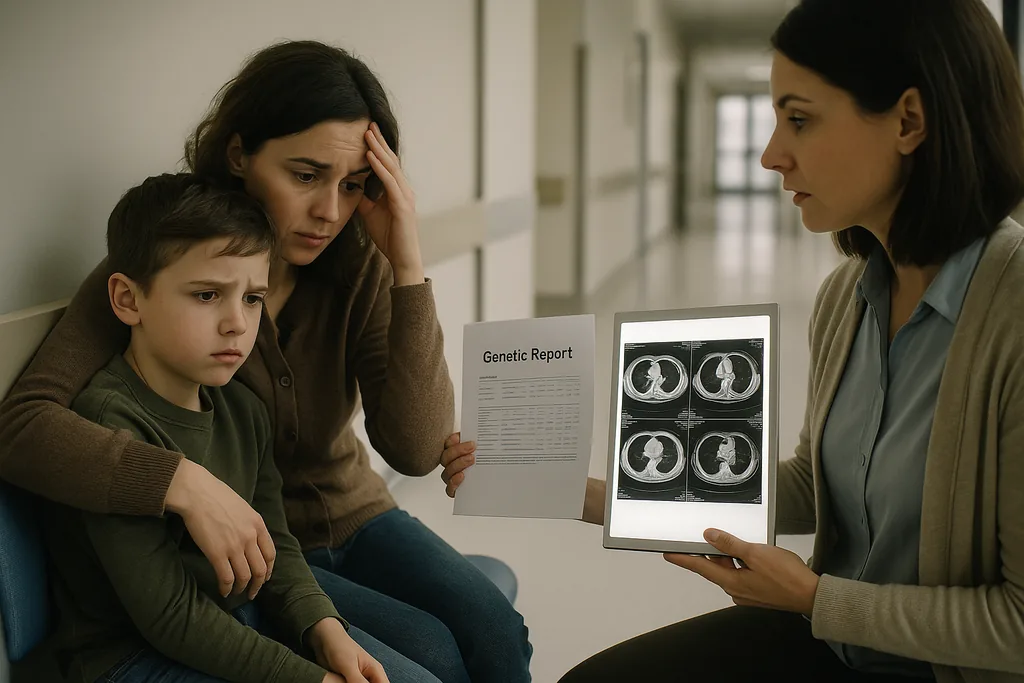
On 10 December 2025 researchers and journalists revealed a startling cascade of harm: sperm from an anonymous donor who carried a rare mutation in the TP53 gene was distributed to fertility clinics across Europe and used to conceive at least 197 children. Some of the children born after treatment with that donor’s sperm have already developed cancer and a number have died; clinicians warn the mutation carries an exceptionally high lifetime risk of malignancy for anyone who inherits it.
The biology: mosaic TP53 and Li‑Fraumeni syndrome
The genetic lesion at the centre of this case affects TP53, a gene often described as the genome’s guardian because it helps detect DNA damage and stop cells from turning cancerous. A specific damaging change in TP53 can cause Li‑Fraumeni syndrome, a hereditary condition that dramatically raises the lifetime risk of several cancers — including childhood cancers, sarcomas, brain tumours and breast cancer — often at young ages.
What makes the donor’s situation unusual and especially dangerous is that he was mosaic for the TP53 mutation. Mosaicism means the mutation arose after the initial fertilised embryo that became the donor, so it is present in some of his cells but not all. According to clinicians involved in the investigation, up to about 20% of his sperm carried the mutated gene while most of his other tissues did not. That explains why the man was healthy and passed routine donor checks, yet could still father children who would carry the mutation in every cell of their bodies if conceived from affected sperm.
How the donor’s sperm reached dozens of clinics
Initial clinical alerts came when paediatric oncologists noticed clusters of cancers in children who were linked to the same anonymous donor. At the time clinicians had identified dozens of children associated with the donor and — in a subset that had been genetically tested — found a worrying fraction carried the TP53 variant. Of the children screened during the preliminary clinical work, several had already developed cancer and some had experienced multiple primary tumours.
After the finding, the supplier blocked the donor from further use. National fertility authorities where affected patients were treated have been notified, and regulators such as the United Kingdom’s Human Fertilisation and Embryology Authority (HFEA) were informed that a small number of British patients had travelled abroad for treatment with that donor’s samples.
Screening, legal limits and the international patchwork
This case highlights an uncomfortable truth about donor screening and the international sperm trade: present checks focus on health, infectious disease and family history and usually sample blood or saliva. They are not designed to detect low‑level mosaic mutations that may be present only in the germline or in a subpopulation of sperm. A standard donor genetic screen, even if it includes sequencing, can miss mosaicism if the mutation is absent or rare in the tissue sampled for testing.
Regulation is another complicating factor. There is no binding international limit on how many families may receive sperm from a single donor; national rules vary. The investigation found examples of domestic limits being exceeded — for example, in one country a donor was supposed to be used by a maximum of six families but tens of children were born from the same donor’s sperm. Large international sperm banks export samples to many clinics, increasing the potential reach of any undetected problem and making oversight difficult.
Experts quoted in the reporting emphasise a trade‑off: tightening screening rules or shrinking the donor pool carries consequences for access to assisted reproduction. At the same time, the scale of cross‑border distribution raises clear safety and ethical questions about donor limits, traceability and whether international standards are needed for genetic testing and reporting in gamete donation.
Families facing lifelong surveillance and uncertainty
Clinicians and patient advocates describe the personal toll in stark terms. Parents told investigators they received urgent calls from clinics asking them to have children screened after learning their child may have been conceived with sperm from the implicated donor. For families of children who have already been diagnosed with cancer, the event is catastrophic: some children have had more than one primary tumour and a number have died.
For carriers who are well, the diagnosis still imposes a lifelong medical and psychological burden. Surveillance regimes require frequent imaging and medical follow‑up, and for many the knowledge of very high cancer risk alters life planning. Patient groups and fertility charities say these cases are rare in the context of the total number of donor‑conceived children, but the scale of this single donor’s distribution means many families are now confronting difficult medical and ethical choices.
Policy responses and practical steps
Responses so far have been pragmatic and reactive: the supplier stopped using the donor; clinics and national regulators are notifying patients; affected families are being offered genetic counselling and screening. Professional societies have been reminded of long‑standing proposals to limit the number of families per donor — suggestions range from modest national limits to proposals for international registries that would improve traceability and reduce the chance a single donor can be used excessively.
There are also social concerns: children who discover they have hundreds of half‑siblings face complex identity and psychological issues, and patient advocates say the welfare of donor‑conceived children should factor into policy decisions about donor limits and anonymity.
Immediate advice for patients and clinics
Clinics, fertility authorities and patient groups are advising anyone who used donor sperm from the implicated bank to contact the clinic that arranged their treatment. Where national regulators have contact details, clinics are being asked to notify patients and offer genetic counselling and testing. Families with affected children should be referred to specialist cancer genetics teams that can arrange appropriate surveillance and support.
The case is likely to prompt national reviews of oversight for donor gametes and renewed debate on whether international standards are needed to prevent a single donor causing such widespread harm. It also serves as a reminder of the limits of current screening: genetic testing reduces risk but cannot remove it entirely.
Sources
- Rouen University Hospital (Dr Edwige Kasper)
- Institute of Cancer Research (Prof Clare Turnbull)
- European Sperm Bank
- European Society of Human Genetics (clinical reports from paediatric oncologists)
- Human Fertilisation and Embryology Authority (HFEA)
- European Society of Human Reproduction and Embryology (policy recommendations)