China to Reclaim Damaged Shenzhou Capsule
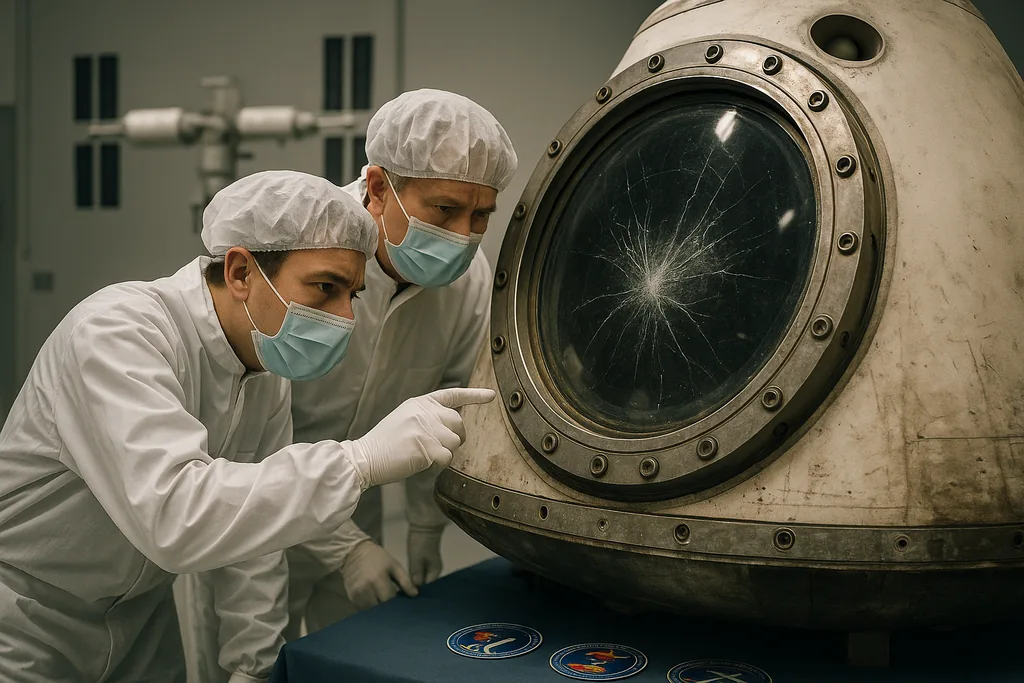
A millimetre strike and a centimetre crack
In early November, a routine end‑of‑mission return turned into an emergency for China's crewed space programme when engineers discovered a hairline crack in the small window of the Shenzhou‑20 return capsule. According to officials, investigators now believe the damage was caused by a speck of orbital debris — likely smaller than a millimetre — travelling at orbital velocities. Although the object was tiny, the impact opened a crack that extends over about a centimetre, a structural flaw serious enough to take the vehicle out of service for crewed flight.
The crack was found just before the Shenzhou‑20 crew were due to leave the Tiangong space station. Rather than risk a crewed re‑entry, mission controllers moved the astronauts into a different capsule already docked at the station and brought them home safely. That decision left Tiangong with a newly arrived crew and no immediately available, flightworthy return vehicle.
Emergency launch and crew shuffle
Faced with that gap, the national programme executed a rapid response: engineers prepared and launched a replacement spacecraft, Shenzhou‑22, on 25 November. That vehicle is slated to return the three astronauts who remain aboard Tiangong sometime in 2026. Meanwhile, the damaged Shenzhou‑20 has been kept docked to the station while officials arranged its uncrewed return for forensic inspection.
Space programme spokespeople have said the capsule will be brought back without crew so teams on the ground can study the damage directly and gather "the most authentic experimental data" about how a tiny hypervelocity impact produced a significant crack. Those findings will inform both operational safety decisions and future vehicle designs.
Why a cracked window is dangerous
The Shenzhou return capsule is a compact, heavily instrumented pressure vessel designed to survive re‑entry heating, deceleration loads and the stresses of life support for a crew. Windows on such capsules are small, multilayered structures that must resist both external micrometeoroid and orbital debris (MMOD) impacts and the cabin pressure differential of a pressurised atmosphere against near‑vacuum space.
Even a hairline crack in a window is not merely cosmetic: crack propagation under load, the risk of sudden depressurisation or the ingress of hot gases during re‑entry could rapidly overwhelm life‑support systems. For that reason, flight rules typically err on the side of caution — as happened here — and mandate an uncrewed return or an emergency rescue launch when a vehicle is judged not flightworthy.
Space junk and the operational fallout
This episode is a reminder that orbital debris is an operational hazard for every nation that operates in low Earth orbit. Over the past few years, breakups of old satellites, collisions between defunct objects, and even deliberate anti‑satellite tests have multiplied the number of small, high‑speed fragments in popular orbital lanes. At orbital velocities, even millimetre‑scale particles carry enough kinetic energy to damage thermal protection, windows, sensors and other vulnerable surfaces.
The practical consequence for a space station is logistical: missions rely on a steady rotation of vehicles. A standard crew handover period normally sees two crewed spacecraft docked simultaneously, enabling a straightforward swap and an assured return vehicle for every astronaut. When one return vehicle is removed from service mid‑mission, that safety margin disappears and an emergency replacement must be launched. That is exactly what the programme did here, executing a rapid turnaround to restore Tiangong's return capability.
What the uncrewed return will test
Returning the capsule without crew does several things at once. It allows technicians to recover the physical window and surrounding structure for laboratory analysis, to characterise the impact site and the material failure mode. Engineers will be able to measure micro‑fracture patterns, look for embedded particles, assess any local deformation of the window stack, and examine seals and nearby structures for secondary damage.
Those hands‑on measurements provide much more definitive information than remote imagery or orbital inspections can deliver. They feed into risk models for micrometeoroid and debris shielding, drive requirements for window materials and thicknesses, and may change inspection protocols before future launches. The data could also be used to refine orbital traffic‑monitoring thresholds and conjunction assessments that trigger avoidance manoeuvres.
Operational lessons and international context
China's response — pausing the return, swapping crews into a different capsule and launching a replacement within weeks — demonstrates a high degree of operational resilience. It also underscores the growing administrative and technical costs of debris: insurance and mission‑planning burdens rise as operators must factor in additional contingency vehicles, more frequent collision‑avoidance manoeuvres, or increased inspection regimes.
The incident adds pressure to long‑standing calls for improved debris mitigation, more transparent satellite traffic management and international norms to reduce the creation of new fragments. While political and legal barriers prevent some formal collaborations, there has been an uptick in ad‑hoc, operational coordination around collision warnings and manoeuvres between different space actors. Nevertheless, experts say the problem will only worsen without active removal methods and stronger design standards for satellites and upper stages.
Looking ahead
On the technical side, the forensic analysis of Shenzhou‑20's window will be the clearest direct evidence yet of how micro‑impacts from orbital debris manifest on crewed vehicles. Any material insights are likely to affect future Shenzhou builds and could influence design choices for windows, seals and inspection ports. Operationally, the programme has restored a return vehicle with the Shenzhou‑22 launch, but the episode will almost certainly prompt a review of inspection processes, stockpiling of spare vehicles and contingency launch readiness.
For Tiangong's crews, the immediate danger has passed: the astronauts returned safely in November and a replacement craft is in place. For the wider space community, the incident is a concrete example of an abstract risk. It shows how a tiny fragment, invisible to the naked eye and almost impossible to track individually, can force national space agencies into expensive and disruptive contingency operations — and why the international conversation on orbital sustainability is no longer academic but operationally urgent.