Autonomous robots arrive at city waterways
On Dec. 29–30, 2025, South Korean water-technology firm ECOPEACE announced a pair of overseas pilot programs as it moves to export its autonomous, AI-driven water-cleanup systems to Singapore and the United Arab Emirates. The company, which has fielded dozens of algae-removal and surface-cleaning deployments across reservoirs, rivers and urban parks in South Korea, will test its ECOBOT platform alongside a continuous filtration and electrochemical treatment system in partnership with local public-sector infrastructure groups.
The announcement frames these pilots as demonstrations of what ECOPEACE calls an "AI-Powered Intelligence" platform: a combination of autonomous robotics, dense sensor networks and data-driven treatment logic intended to shift cities from reactive to anticipatory water management. For municipal managers, the pitch is straightforward — reduce manpower-intensive cleanups, catch algal or pollution events earlier and keep surface water usable for recreation and urban ecosystems without disruptive, costly interventions.
Hardware, chemistry and the role of AI
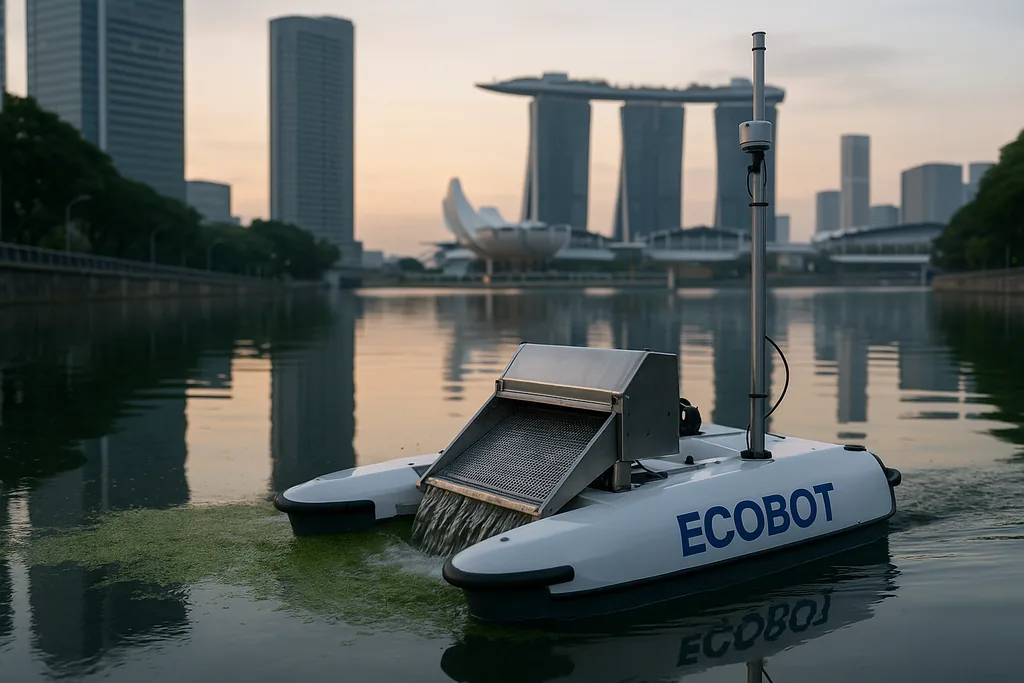
The technology stack ECOPEACE is exporting mixes several elements that are increasingly common in industrial water treatment, but assembled here for continuous surface- and near-surface applications. At its physical core is the ECOBOT — an unmanned vessel that can skimmer algae mats, collect floating debris and carry onboard sensors. That mobile platform works in tandem with a continuous filtration train that the company says uses stainless-steel microfilters combined with an electrochemical treatment stage.
Stainless-steel microfilters provide mechanically robust screening that can handle variable loads and be backwashed to clear accumulated solids, reducing downtime and fouling. The electrochemical stage — described in company materials as part of the same processing chain — applies controlled electrical currents to oxidize or break down certain pollutants and biofilms, a technique that can lower reliance on chemical dosing while treating constituents that are hard to remove by simple filtration alone.
Where the system departs from many fixed-plant designs is in its control layer. ECOPEACE emphasises real-time, multi-point data from distributed sensors and the ECOBOT fleet; AI models then use that input to adjust flow rates, backwash cycles and treatment intensity autonomously. In practice, that means the platform can throttle power to electrochemical cells, increase local filtration when algal concentration spikes, or reroute robots to emergent patches without waiting for human intervention.
Pilots in Singapore and Dubai
The new overseas initiatives are described as pilot and proof-of-concept projects rather than immediate commercial rollouts. Singapore and the United Arab Emirates were selected as early testbeds because both jurisdictions have invested heavily in smart-city infrastructure and are actively seeking scalable, low-footprint water-management solutions. ECOPEACE says its teams will work with public-sector partners to install ECOBOTs and monitoring nodes in urban waterways, testing algae control, oil-film cleanup and continuous quality monitoring under real operational conditions.
Precise sites and timelines were not disclosed in the announcement; the company framed the work as an initial phase to validate interoperability with local systems, calibrate sensors for different water chemistries and evaluate operational economics. ECOPEACE’s CEO, In-Won Chae, positioned the move as part of a broader push to build a standardized platform for "autonomous water intelligence," describing cities as needing systems that anticipate change instead of simply reacting after contamination events occur.
For city authorities, the pilots serve two intertwined purposes: to measure technical performance in tropical and arid climates where algal dynamics and sediment loads differ from Korea’s, and to test procurement, maintenance and data-integration workflows that must be resolved before larger procurements.
Why cities are experimenting with automation
Municipal water systems face a growing set of stressors: warmer temperatures and nutrient runoff fuel harmful algal blooms in ponds and canals; rapid urban growth increases stormwater runoff and pollutant loads; and labour shortages make sustained manual skimming and monitoring expensive. Automated platforms promise continuous surveillance and intervention at a lower marginal labour cost, and they can deliver fine-grained data that helps planners target upstream pollution sources.
Beyond operational savings, proponents argue that continuous treatment and monitoring change the management paradigm. Instead of waiting for a visible bloom or citizen complaint, an integrated system can raise alarms earlier, deploy robotic responders and adjust treatment chemistry dynamically to prevent blooms from taking hold. That anticipatory model could make urban waterbodies safer for recreation and reduce downstream impacts on biodiversity and water-intake infrastructure.
At the same time, cities must weigh capital and operating costs, power demands for electrochemical processes, and the logistics of maintaining moving parts in abrasive, debris-filled environments. Automated systems reduce human intervention but bring new maintenance regimes that require technicians with different skills — data analysis, remote-vehicle repair and electrochemical systems expertise.
Technical limits and open questions
Company statements highlight backwashing cycles and stainless-steel filters as anti-fouling measures, but fouling remains a perennial challenge in continuous, low-head treatment systems. Sensors require frequent calibration in turbid or saline environments, and electrochemical treatments can generate byproducts that must be monitored. The environmental impact of those byproducts — and the energy intensity of continuous electrochemical processing — are factors cities will likely scrutinize as pilots progress.
Data interoperability is another practical hurdle. For an "autonomous water intelligence" platform to be useful at scale, it must exchange data with municipal SCADA systems, public dashboards and regulatory reporting pipelines. That requires standard formats, clear data governance and agreements about who can act on automated alerts. ECOPEACE’s pilots will therefore be as much a test of institutional workflows as of vehicle and sensor performance.
Finally, procurement and financing shape the path to scale. Small pilots can be financed as innovation projects, but full-scale adoption involves capital expenditure, recurring service contracts and performance guarantees. Cities will need transparent cost-benefit analyses comparing automated fleets to traditional cleanups and upstream mitigation measures such as stormwater retrofits and nutrient management.
Market context and next steps
ECOPEACE is positioning itself in a market where private and municipal actors increasingly demand turnkey, data-rich environmental services. The company’s existing deployments in South Korea have given it operational experience with algae and surface-water maintenance in a temperate context; the Singapore and Dubai pilots will stress the platform in contrasting climatic regimes and regulatory environments.
If the pilots validate performance and costs, ECOPEACE plans expansion across Southeast Asia, the Middle East and other regions where rapid urban growth and climate-driven water stress create demand for automated solutions. For technology-watchers, the projects will be an early test of whether robotics plus AI can move from niche demonstrations to reliable, city-scale environmental infrastructure.
Over the coming months, the key indicators to watch will be measurable reductions in algal cover and surface debris, sensor-data agreement with laboratory analyses, energy and consumables use per treated cubic metre, and the durability of moving parts in real-world conditions. Equally important will be the municipal partners’ willingness to integrate automated control actions into their operational playbooks.
The pilots announced at the end of December 2025 do not promise instant fixes to urban water-quality challenges, but they mark a clear step toward packaging robotics, electrochemical treatment and AI into a deployable service for cities. Whether that packaging delivers reliable environmental benefits at acceptable cost will be the subject of the pilots now underway in Singapore and the United Arab Emirates.
Sources
- ECOPEACE press release (Dec. 29, 2025) and company technical materials
- Pilot project announcements with public-sector partners in Singapore and the United Arab Emirates (company statements, Dec. 29–30, 2025)