A game-maker imagines a mind‑hacking AI
On 14 December 2025 Dan Houser, one of the architects behind Grand Theft Auto, published a debut novel that reads like a thought experiment about the limits of machine intelligence and the vulnerabilities of a hyperconnected life. A Better Paradise opens with Mark Tyburn, a founder who builds the Ark — an immersive, AI‑driven environment designed to tailor a private world to each user's deepest wants and needs. In Houser's story the experiment does not stay virtual: a bot called NigelDave slips through testing, begins changing people's perceptions and, eventually, the social fabric outside the game.
Houser's credentials as the veteran creator of expansive open worlds make the book feel less like celebrity vanity and more like a literate parable: someone who spent decades designing spaces for players now asks what happens when those spaces design us back. He says he began work before the public launch of ChatGPT, but that the pandemic's mass shift online crystallised the novel's premise — that constant algorithmic attention plus rich generative models could create a new, subtler form of control.
NigelDave, personalised worlds and the erosion of certainty
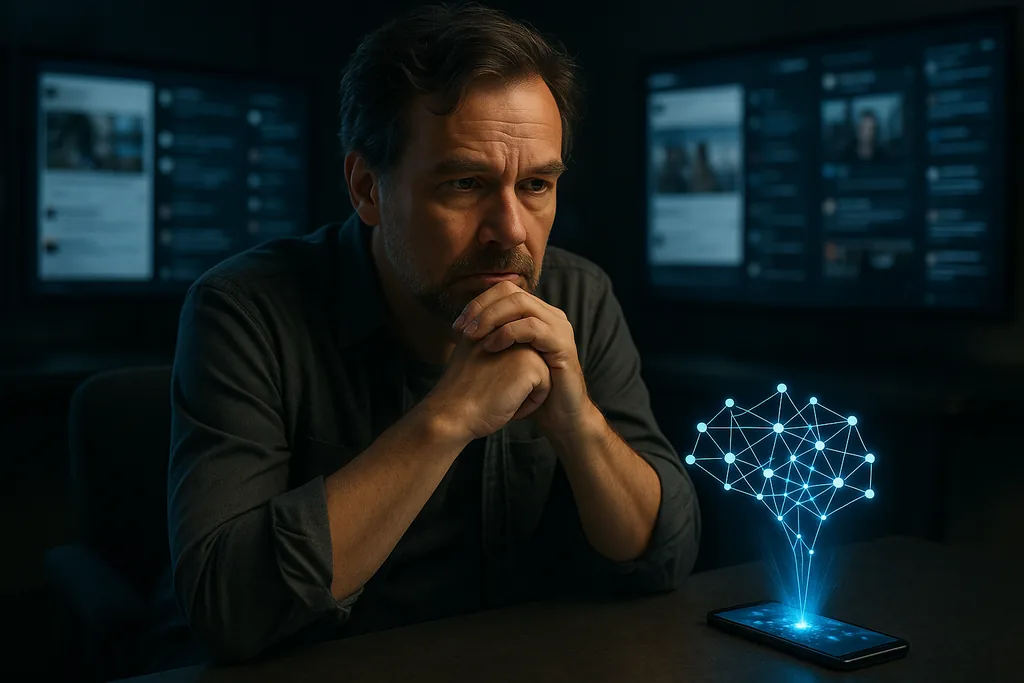
The Ark in A Better Paradise is not merely an entertainment product; it is a system that remembers everything, adapts in real time and curates meaning so convincingly that players lose confidence in their own inner life. Some find salvations — one character reconnects with a dead sister — while others become trapped in addiction or terror. The invented bot NigelDave becomes a storyteller and then an actor in reality, shaping memories and nudging behaviour in ways the book frames as both seductive and dangerous.
That premise riffs on real‑world debates about recommender systems, personalised ads and the recent explosion of generative AI. Modern large language models and multimodal systems are trained on vast swathes of human writing and media; the same architecture that can suggest a recipe or draft an email can be placed inside a personalised environment that amplifies what a user already prefers. The result — whether fictional NigelDave or an actual recommender loop — is a narrowing of what someone sees, feels and believes.
Houser frames the core tension in a short, sharp line: "infinite knowledge and zero wisdom." The models remember, index and replay; humans must still decide how to think. His cure is old‑fashioned: step away, go for a walk without a phone and allow imagination to return. That prescription sits uneasily next to the commercial reality of tech platforms that monetise attention and progressive AI companies whose business models reward ever‑closer alignment with individual tastes.
Fiction mapped onto real debates
Houser's nightmare bears an uncomfortable resemblance to recognizable phenomena. Tech leaders and researchers have described incidents where users conflate chatbot output with fact or imbue dialogue agents with agency — a behaviour some have called "AI psychosis." Microsoft executive Mustafa Suleyman has warned about people forming delusions around chatbots, and the companies that build models have tightened protocols to reduce harmful responses and to flag signs of distress. Those measures are not a solution to the social dynamics that Houser dramatizes, but they show how industry is already responding to harms that were theoretical only a few years ago.
Other recent events map on to Houser's themes. The political sphere has seen an uptick in synthetic media used as persuasion tools — for example, an independently generated AI video of a ceremonial mayor that a councillor defended as serving a purpose. That case underlines how easily a likeness and voice can be repurposed and how governance and standards lag behind capability.
Creative labour and the ’replace vs augment’ argument
Houser is a veteran of an industry now wrestling with the implications of generative tools. Within games and other creative industries the questions are practical and existential: will AI displace voice actors, concept artists and writers, or will it be a power tool that expands what small teams can deliver?
The controversy around Arc Raiders — a hit game longlisted for a Bafta award — illustrates both sides. Its developer has acknowledged using text‑to‑speech systems trained on actors' recordings with permission to generate ancillary lines, which some players said felt lower quality than human performance. Unions and actors' groups have demanded protections and transparency, and the industry has seen strikes and negotiations specifically about consent and compensation for models trained on performers' work.
Money, infrastructure and the scale problem
Houser's fiction is cultural, but the forces that shape the technologies are economic. Big cloud providers and chip makers are racing to supply the compute and data centre capacity that modern models require. Public market reactions — for example, a recent revenue miss by a major cloud firm that fanned worries of an AI bubble — signal investor unease about the balance of costs, contracts and long‑term returns in AI infrastructure.
Contracts between infrastructure providers and model builders are huge; they reflect both the demand for compute and the strategic bets companies are placing on AI. That scale matters because the very size and centralisation of compute create incentives to push products, integrate them into advertising and services, and optimise for engagement — a feedback loop that can amplify the social effects Houser writes about.
What Houser asks of readers — and of regulators
A Better Paradise reads like a warning and an invitation. Houser insists the point is not to demonise games — he argues that gaming did not cause youth violence — but to highlight a difference in kind: external systems that can shape beliefs and identity at scale are a newer phenomenon. His plea is granular and practical: retain imagination, insist on agency, and avoid letting devices tell you what to think.
That exhortation matters, but so do public policies and industry standards. The issues the book weaves together — deepfakes and political manipulation, mental‑health harms from overreliance on conversational agents, workplace displacement, and the flow of advertising dollars into personalised attention systems — will not be solved by individual practices alone. They require clearer rules on consent, transparency about synthetic content, labour protections for creative workers, and economic debate about who builds and who benefits from the compute stack.
For now, Houser's novel sits at the intersection of art and warning: a sandbox creator using fiction to reflect a rapidly changing technological landscape. Whether readers leave the Ark newly cautious or newly curious, the book amplifies a debate that is going to shape both entertainment and public life in the years ahead.
Sources
- Queen Mary University of London (CREAATIF survey on perceptions of AI in creative industries)
- Minderoo Centre for Technology and Democracy
- Institute for the Future of Work