Immortality Through Technology: How Close Are We?
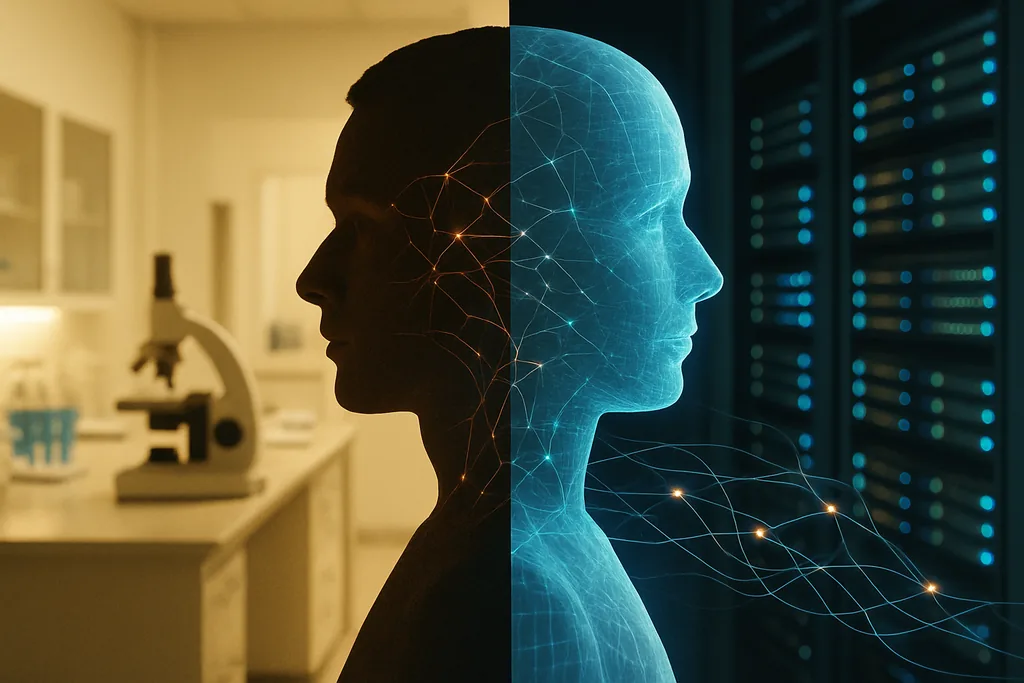
From myth to lab bench: the modern pursuit of living longer
For millennia humans have told stories about escaping death. Today that impulse has migrated from myth to laboratories, venture capital portfolios and server farms. Two broadly distinct strategies have attracted sustained investment and scientific attention: interventions that try to slow, repair or reverse the biology of aging; and attempts to persist personality and memory in digital form. Both are advancing fast, but both face deep scientific, engineering and moral obstacles.
Biology first: repairing the machinery of aging
Biotech teams are chasing aging not as a single disease but as a set of interacting processes—epigenetic drift, protein aggregation, cellular senescence, mitochondrial decay and immune dysfunction. One of the most talked-about laboratory tools is partial cellular reprogramming: a way to reset a cell’s epigenetic marks toward a younger state without wiping its identity completely. Experiments in animals have produced striking improvements in tissue repair and function, rekindling hopes that aspects of aging could be slowed or even reversed if safety challenges can be overcome.
Alongside academic labs, several deep-pocketed startups have emerged. Some aim to use AI to design proteins that restore youthful cellular processes; others plan clinical trials of therapies intended first to treat specific age-related diseases and then, if safe, to expand to broader rejuvenation uses. A number of these firms have set aggressive timelines and raised large sums to accelerate discovery and translate laboratory findings into human testing.
What the biology still needs: safety and durability
Partial reprogramming is promising but runs up against two thorny problems. First, reprogramming factors can increase the risk of tumors if cells lose their differentiated state entirely. Second, the long-term durability of any rejuvenating change is unknown: will a treated tissue stay youthful for years, or will it regress once the therapy stops? Regulatory and clinical-readiness hurdles are high because interventions that aim at aging touch nearly every organ system. Careful, incremental trials that target specific conditions—such as certain optic nerve injuries or organ dysfunctions—are appearing as the prudent path to test the concept in humans.
Digital immortality: avatars, grief bots and neural models
Where biology tries to extend the substrate of life, the digital route tries to extend patterns—memories, conversational style, images of a person—inside software. A new generation of services uses machine learning to ingest text messages, social media, photographs and voice recordings to produce chatbots and animated avatars that mimic a deceased person's conversational manner. These systems are already used by grieving families and have become prominent enough to draw filmmakers to document the social and psychological effects.
On the technical front, advances in 3D neural-rendering and long-term identity models are making it possible to synthesize highly realistic, age-progressive head avatars and to animate them across multiple life stages. Those tools let engineers build richer, more convincing simulations of an individual's appearance and voice over time, blurring the line between a static memorial and an interactive recreation. But realism is not the same as continuity of consciousness: reproducing conversational quirks is much easier than reproducing a full, living mind.
Cryonics and structural preservation
Outside both biological rejuvenation and software duplication, cryonics and advanced chemical fixation aim to preserve brains and bodies for a hypothetical future repair. Organizations offering cryopreservation report that they continue to perform cases and are developing improved field stabilization and transport methods to reduce damage between legal death and freezing. To proponents, cryonics is an insurance policy against current technical limits; to critics, it is speculative and offers no guarantee that future technology will be able to recover a preserved person.
The elephant in the room: can pattern be person?
At the philosophical and scientific core of any immortality claim lies a key question: does copying or preserving a brain's structure preserve the person who lived inside it? Even if we could map every synapse and molecular state, it remains unclear whether a digital copy would be the same conscious individual or a new entity with the original's memories. Whole-brain emulation—the idea of scanning a brain and running it in silico—faces immense practical problems: imaging resolution at the molecular and synaptic scale, capturing dynamic biochemical states, and the computational cost of simulating trillions of interacting processes.
Engineering gaps and timeline realism
From an engineering standpoint, both paths confront near-term and long-term technical bottlenecks. Rejuvenation therapies must pass rigorous safety trials and show durable benefit. Digital preservation methods must solve data sparsity—reconstructing a lifetime of internal states from incomplete digital traces—and then show that those reconstructions are meaningful in psychological terms. Both approaches will also require unprecedented infrastructure for storage, compute and medical delivery, as well as robust regulation to prevent abuse. Current expert estimates for broadly available, reliable 'immortality' solutions vary widely; many researchers expect incremental extensions of healthy lifespan in the coming decades rather than an abrupt vanishing of mortality.
Society, law and inequality
Beyond the lab, the social consequences are profound. Who would control access to life‑extending therapies or long-term data archives that could drive digital afterlives? How would inheritance, legal death, and consent be redefined if a person’s digital replica continues to interact after physical death? These technologies could exacerbate existing inequalities if only the wealthy can afford effective rejuvenation or high-fidelity preservation. They also raise delicate questions about grieving and closure: for some, interacting with a simulation may comfort; for others, it may prevent moving on.
Why this matters now
The convergence of gene editing, epigenetic reprogramming, AI-driven drug design and high-fidelity digital modeling means the dream of extending aspects of life is no longer purely speculative. That doesn’t make immortality imminent—whole-brain emulation and durable, universal rejuvenation remain uncertain—but it does make careful public debate, regulation and investment in rigorous clinical science urgent. The choices society makes over the next decade will shape whether these technologies serve broad public health and dignity, or become privatized and destabilizing novelties.
Conclusion: a cautious hope
Technology is turning an ancient longing into a set of tractable engineering projects, each with its own promise and peril. Biological work offers the clearest path to longer, healthier lives, while digital methods offer new forms of memory and presence. Neither path guarantees a human continuity that matches the cultural meaning of immortality. What we can expect in the coming years is incremental progress—longer healthspans, richer digital memorials and better preservation techniques—accompanied by hard ethical choices about who benefits and why. The immortal future, if it arrives at all, will be the product of decades of science and debate, not a single breakthrough, and its value will depend as much on how we organize it as on whether we can build it.