Israel’s First Robotics War
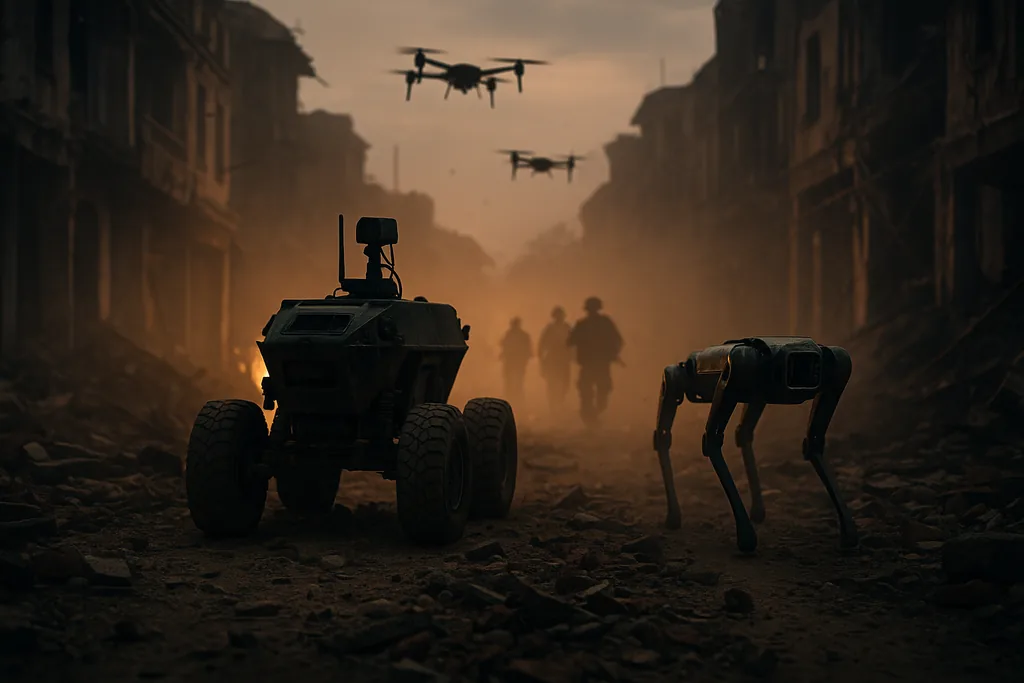
‘First robotics war’: what the Defence Ministry released and why it matters
On December 1, 2025, the Israeli Defence Ministry published a video walkthrough of robotic systems used in the campaign against Hamas, calling the confrontation the armed forces’ "first robotics war." The montage shows a wide set of unmanned platforms — aerial drones, remote ground vehicles and purpose-built devices for tunnel work — and frames their use as a tactical and doctrinal evolution for the military.
How is this different from previous conflicts?
Robotics and unmanned systems have been present in combat for years, but analysts point to two inflection points visible in the new footage. First, the sheer scale: small drones and ground robots are no longer niche assets but routine tools embedded in many units. Second, integration: the video frames robots as components in human‑machine teams that combine remote sensing, data links and command systems to shorten the sensor-to-action loop. That shift — from experimental platforms to standardized operational gear — is what the defence ministry and military commentators mean by the term "first robotics war."
Early examples of Israeli robotics in military use go back decades and include portable reconnaissance robots, perimeter UGVs and weaponised remote platforms. The recent campaign shows how those earlier systems have evolved into a layered toolkit that pairs aerial surveillance and strike assets with ground robots for close work and logistics.
From reconnaissance to lethal effects: the drone dimension
One of the most consequential developments is the expanded role of small, often commercially derived drones. Videos and reporting from past phases of the conflict documented not only surveillance but also armed and sniper‑configured UAVs, and the new ministry footage underscores that aerial systems are now central to both observation and direct engagement. The rise of small, agile drones that can carry sensors or lightweight weapons has forced militaries to adapt air defence, counter‑UAS doctrine and rules of engagement.
That dual use — eyes in the sky and, at times, weapons — complicates legal and ethical questions. Even where humans retain decision authority, the fusion of automated target detection, fast communications and lethal payloads raises concerns about speed, accuracy and accountability in complex urban settings.
Autonomy, human oversight and the ethics debate
Public portrayals of robotic warfare often conflate teleoperation (a human controlling a machine remotely) and autonomy (a system making decisions without human input). Contemporary armed systems fall along a spectrum: from human‑in‑the‑loop designs that require a human to authorise a strike, to human‑on‑the‑loop systems where a human supervises automated behaviour, to the hypothetical fully autonomous weapons that choose and engage targets independently. The ministry’s footage emphasises human operators in the loop, but the speed and automation of sensor processing remain ethically significant.
For civil‑military planners the key policy questions are familiar: how much automation is acceptable, where should safeguards be placed, and how can commanders ensure compliance with international humanitarian law in environments where sensors, algorithms and weapons operate at machine speed?
Strategic and industrial ripple effects
When a major military publicly showcases routine use of robotic systems, export and procurement markets take notice. Israel is a leading developer of unmanned aerial and ground platforms, and demonstrating operational concepts in an active theatre accelerates interest from foreign buyers and fuels further investment in suppliers and start‑ups. That dynamic shortens the development cycle for battlefield robotics globally while also spreading tactical patterns and counter‑measures.
At the doctrinal level, the video signals a move toward human‑machine integrated formations: units designed from the outset to operate alongside robots for sensing, protection and logistics. Other armed forces are already experimenting with similar concepts; what differs is the pace and operational feedback loop a high‑intensity campaign provides.
Risks, vulnerabilities and what to watch next
- Proliferation: wider availability of capable UAVs and UGVs lowers the barrier for non‑state actors to adapt similar tools.
- Counter‑measures: electronic warfare, drone jamming and capture attempts create an arms‑race dynamic between offensive robots and defensive systems.
- Legal frameworks: international norms and national rules for autonomy and target‑selection will be tested as operations rely more on automated sensing and decision aids.
- Civilian harm and accountability: rapid sensor fusion and compressed timelines raise the stakes of misidentification in densely populated areas.
All of these trends argue for clearer doctrine, stricter certification of autonomous behaviours, and robust human oversight where lethal force is concerned. They also point to an emerging reality: robots are becoming a standard part of modern combat, not just technical curiosities.