Math Says the Universe Isn’t a Simulation
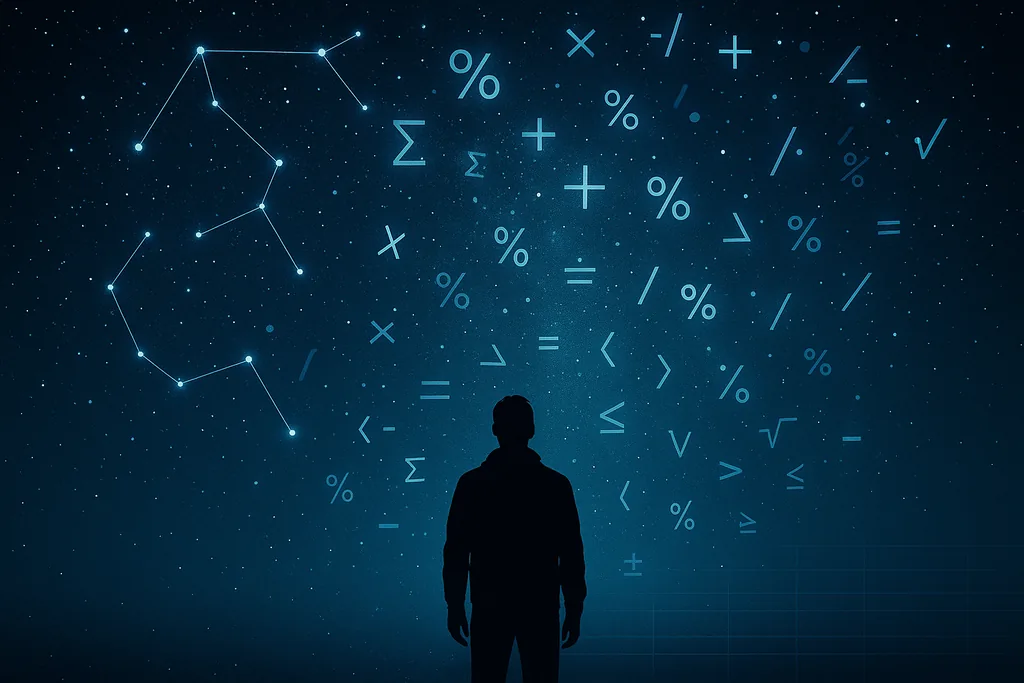
Researchers argue a mathematical ceiling makes perfect simulation impossible
Those claims and the broader public reaction were summarised in a series of press briefings and coverage tied to the paper's release.
Why logical undecidability matters for physics
Put simply, Gödel showed that in any sufficiently expressive formal system there are true statements that the system cannot prove. Tarski demonstrated that certain semantic notions cannot be defined from inside a system, and Chaitin brought information theory to the mix by showing that many strings are algorithmically random — with no shorter algorithmic description than the string itself. The paper's authors argue that when you try to build spacetime and physical law from a purely algorithmic bedrock, those kinds of limits carry over: you will encounter real features of the world that resist algorithmic derivation. In their view, that blocks the possibility of a complete, consistent, algorithmic simulation of reality.
How to read this claim — and its limits
There are two important qualifications to keep in mind. First, this is a theoretical, mathematical argument about what computation can and cannot do under certain formal assumptions. It does not point to an empirical anomaly in data that would falsify the simulation hypothesis in the laboratory. Second, every such argument rests on modelling choices: how you formalise quantum gravity, what you count as an "algorithm", and whether you allow features in the simulator that lie outside conventional computation. If you change those premises, the conclusion may no longer follow.
Voices of scepticism — and why they matter
Even before this paper, many physicists and philosophers cautioned that the simulation hypothesis is a tangled mix of engineering, metaphysics and probability. Skeptics point out that arguing from formal undecidability to ontological impossibility requires care: mathematical undecidability applies to particular formal systems, but nature need not be bound to those same syntactic limits. Some commentators also note the longstanding problem that simulation arguments can be arranged to escape falsification by stipulating simulator behaviour: an omniscient simulator could hide any telltale signature. Those conceptual worries remain relevant even if the new mathematical result is correct.
So does this end the simulation debate?
Not entirely. What the new work offers is a strong, formal rebuttal to a common assumption behind many simulation claims — namely, that all features of the world are in principle reducible to the steps of a computation. If you accept the paper's assumptions and technical steps, then a fully algorithmic simulation is impossible. But the broader cultural question — whether some other sort of "simulation" or layered ontology could be true — is more resilient. People can always posit simulators that operate by non-algorithmic means, or limit what they attempt to replicate. The conversation, in other words, moves: from asking whether a simulation is possible in practice, to asking which kinds of metaphysical models are compatible with current mathematics and physics.
Why this matters beyond late‑night speculation
The paper touches on issues with immediate intellectual consequences. It confronts the trend of treating information and computation as the primitive stuff of reality — an approach that has had successes, but that this work argues cannot be the final word. It also matters for how scientists and technologists frame large claims about the future of simulation, virtual worlds and artificial intelligence. If there are principled limits on what algorithmic systems can represent, then some kinds of scientific explanation or synthetic consciousness may be fundamentally out of reach for any simulation-based strategy.
Where scientists go from here
As with any ambitious theoretical claim, further scrutiny is inevitable. Other researchers will probe the paper's formal assumptions, test whether the mathematical reductions map correctly onto physical models, and explore whether weaker or alternative versions of "simulation" survive the critique. This is how theoretical physics advances: a bold mathematical suggestion opens a line of debate that either strengthens our confidence in the result or identifies the precise premises where it fails.
For now, the paper does something useful: it forces a sharper distinction between two questions people often tangle together — whether we could build convincing simulated worlds, and whether the kind of total, algorithmic replication implied by a literal simulation hypothesis is mathematically permissible. On the current reading from the authors, at least, that second question has a negative answer. Whether that settles the wider metaphysical debate is up to physics, philosophy and time.
— James Lawson, Dark Matter