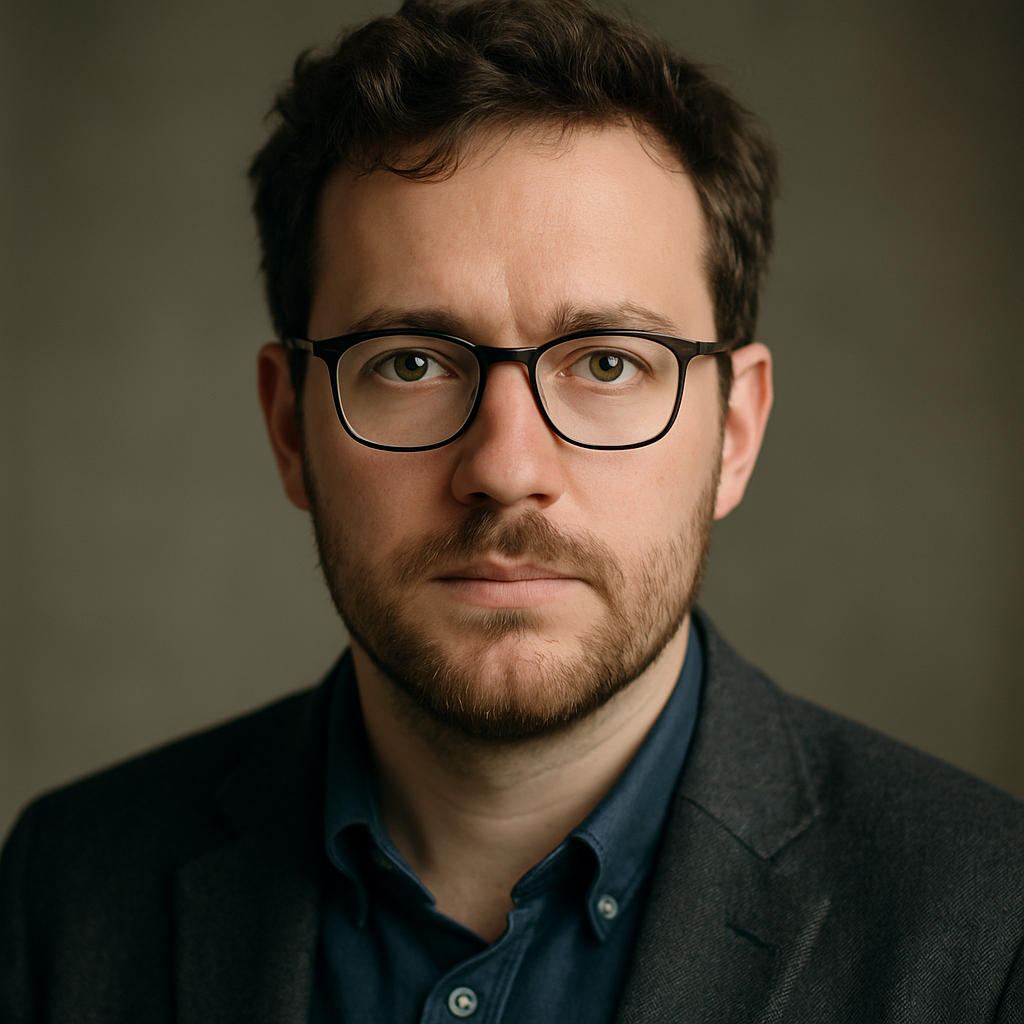
A sudden killing on a winter evening
On the evening of Monday 16 December 2025, officers responding to reports of gunfire found Nuno F. Gomes Loureiro wounded inside his Brookline, Massachusetts, apartment. The 47-year-old professor and director of the Massachusetts Institute of Technology’s Plasma Science and Fusion Center (PSFC) was rushed to a Boston hospital and died the following morning. Norfolk County prosecutors and state police have opened an active homicide investigation; as of this week no suspect has been publicly identified or taken into custody.
Born and raised in Portugal, Loureiro trained in physics at Instituto Superior Técnico in Lisbon and earned a PhD in plasma physics from Imperial College London in 2005. His academic path included postdoctoral work at the Princeton Plasma Physics Laboratory and time at the Culham Centre for Fusion Energy in the United Kingdom before he joined MIT’s Department of Nuclear Science and Engineering in 2016. Colleagues describe him as a rigorous theorist, an enthusiastic mentor and, more recently, the public face of a large team pursuing fusion experiments and applied plasma science.
Over a two‑decade career he received several honours for research and teaching: an NSF CAREER award early in his career, the American Physical Society’s Thomas Stix Award for early‑career contributions to plasma physics in 2015, election as an APS Fellow in 2022, and multiple teaching awards. In 2024 he took the helm of MIT’s PSFC, a laboratory that coordinates hundreds of researchers and students working on magnetic confinement, materials challenges and the engineering needed to bring fusion closer to usable power.
What his work meant for fusion progress
Loureiro’s research focused on the behaviour of magnetised plasmas — the hot, ionised gas that fusion devices must confine and control. Two technical problems dominate that field: turbulence, which saps energy from the plasma and makes confinement harder, and magnetic reconnection, a rapid rearrangement of magnetic fields that can release bursts of energy and damage reactor components. Loureiro made theoretical advances that improved understanding of how turbulence forms and how reconnection proceeds in the messy, high‑temperature plasmas inside tokamaks and other confinement devices.
Those contributions are not abstract: better models of turbulence and reconnection influence how engineers design magnetic coils, shape plasma equilibria and develop control systems that keep a reactor stable long enough to extract net energy. As director of the PSFC, Loureiro was steering collaborative projects that translated laboratory theory into experimental strategy — work that many in the field see as central to making fusion a practical, low‑carbon energy source.
Tributes from a global community
News of his death prompted immediate tributes from colleagues, students and international collaborators. Dennis Whyte, a former PSFC director, remembered Loureiro as a compassionate leader and a clear thinker whose lectures and supervision produced tangible results. Deepto Chakrabarty, head of MIT’s physics department, emphasised how Loureiro had championed plasma physics within the department and inspired graduate students working at the intersection of physics and engineering.
Investigators, social media and a cautionary gap
Police say the shooting occurred around 8:30pm and that neighbours heard loud noises consistent with gunshots. Authorities have released few operational details while the homicide probe is active, and investigators caution the public not to speculate. Law enforcement officers and prosecutors repeatedly remind observers that homicide inquiries often begin with limited, fragmentary information and that professional motives are one of many possibilities.
Despite those cautions, social media filled quickly with speculation. Some commentators pointed to the strategic importance of fusion research and floated scenarios in which Loureiro’s work might have provoked a targeted attack; others drew partisan or conspiratorial links to unrelated violent incidents at universities. Officials, including federal agencies involved in campus‑safety matters, have said they have found no confirmed connection between this killing and other recent shootings in academic settings. Investigators have asked anyone with information to come forward while urging restraint in drawing conclusions from unverified claims online.
Why the case reverberates beyond one lab
Two features explain why Loureiro’s death captured broader attention. First, fusion research has become both technologically and geopolitically prominent: breakthroughs promise a new form of dense, low‑carbon energy and attract interest from governments and private investors worldwide. Second, the abruptness of his killing and the limited public facts created a vacuum that social platforms quickly filled with hypotheses.
That mix — a field with large social stakes and an emotionally charged online conversation — raises uncomfortable questions about researcher safety, transparency and how institutions balance protecting staff with the public’s need for information. Universities and labs typically respond by offering counselling and security reviews; MIT has expressed deep condolences, pledged support to Loureiro’s family and students, and said it is cooperating with investigators.
A personal loss, and a scientific one
Friends and collaborators remember Loureiro not just for papers or awards but for his role as a teacher and father. Reports note he was married with young children and that his family has asked for privacy while they grieve. For a community working toward a long‑term technological transition, the death of a leading theoretician and laboratory director is both a human tragedy and a professional setback.
As police continue their investigation, the scientific community will hold memorials, examine how projects can be sustained and watch for official findings that explain a killing that — for now — raises as many questions as it does sorrow. Until investigators release verified details, colleagues and officials urge the public to avoid amplifying unconfirmed claims and to respect the family’s privacy during an active homicide inquiry.
Sources
- Massachusetts Institute of Technology — Plasma Science and Fusion Center
- Imperial College London — Department of Physics
- Princeton Plasma Physics Laboratory
- Culham Centre for Fusion Energy
- Instituto Superior Técnico (IST Lisbon)
- American Physical Society (awards and fellowship records)