Small insects, big data: a Florida preserve turned into a genetic snapshot
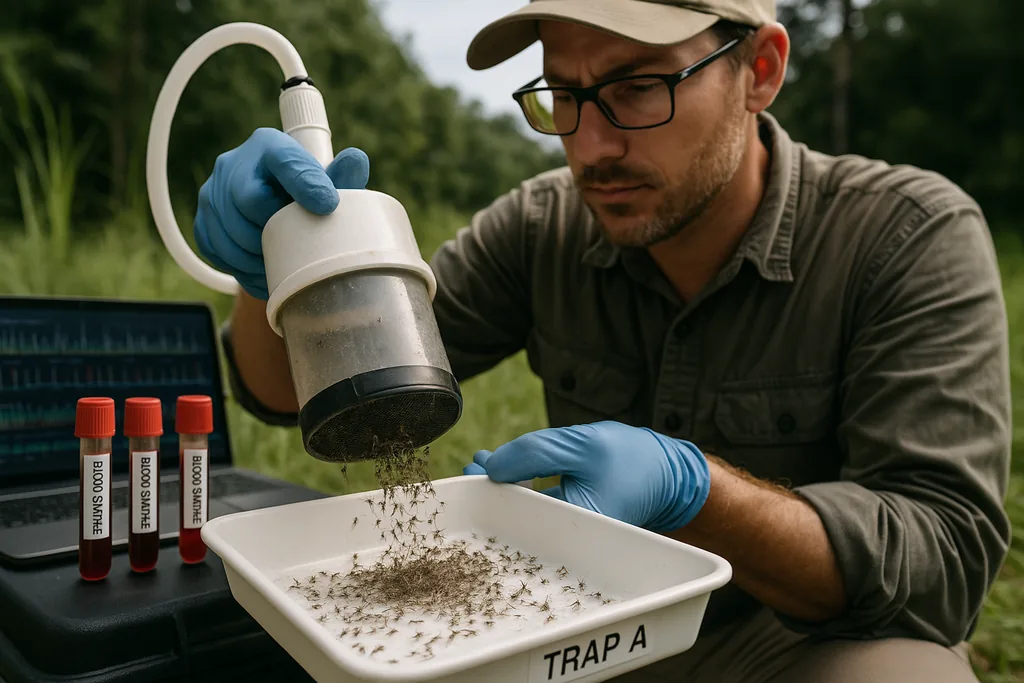
On a humid morning this year in the DeLuca Preserve, 80 miles south of Orlando, researchers emptied vacuum traps and began the messy, low‑tech work behind a surprising headline: mosquitoes can be used as roaming sampling devices for the local animal community. Over eight months, the University of Florida team recovered thousands of fed female mosquitoes and — by sequencing the blood in their abdomens — detected DNA traces from 86 different vertebrate species. That trove ranged from tiny frogs and toads to large birds of prey and alligators, offering a near‑real‑time portrait of which animals had been in the mosquitoes' nets in the days before each capture.
Mosquitoes as biodiversity sensors
The idea reads like a riff on the opening scene of Jurassic Park, when an amber‑encased mosquito preserves dinosaur blood for cartoonish future cloning. The reality is less cinematic but scientifically robust: female mosquitoes bite to obtain proteins for egg production, and the cells and DNA from those blood meals remain in the insect long enough for modern sequencing to detect the host species. The UF group used vacuum traps to catch resting, freshly fed mosquitoes, then applied metabarcoding — high‑throughput sequencing of short genetic markers — to identify which vertebrates had been bitten.
Dr Lawrence Reeves, an entomologist involved in the work, described the approach as a way to "capture vertebrates" from the smallest amphibians to big mammals. Because mosquitoes sample animals opportunistically across habitats — water, trees and ground cover — they can pick up species that camera traps or single‑point environmental DNA (eDNA) surveys miss. The technique is non‑invasive, inexpensive compared with some monitoring methods, and yields a concentrated window into recent animal activity rather than a long‑term residue.
What the traps revealed
From more than two thousand blood meals gathered from 21 species of female mosquitoes, the team recorded DNA matches to animals including bald eagles, coyotes, rattlesnakes, river otters, box turtles and American alligators. The method captured native, migratory and invasive species, as well as organisms with very different life histories — arboreal and amphibious animals showed up alongside terrestrial mammals. One large mammal — the endangered Florida panther — did not appear in the mosquito samples, a null result the researchers attribute to the cats' rarity and the low chance of a mosquito feeding on one of the relatively few animals that remain.
That pattern underscores a key practical strength and weakness: mosquitoes can sample broadly, but rare or highly mobile species may be missed simply because no mosquito bit them during the sampling period. Conversely, abundant or heavily bitten animals are likely to be overrepresented in the data set.
Technical limits, biases and false positives
Metabarcoding of blood meals is powerful, but it has constraints researchers are careful to flag. DNA in a blood meal degrades with time and digestion; the detection window is measured in hours to a few days, not months. Taxonomic resolution depends on the completeness of reference databases: if the local species' sequences are missing from public libraries, identifications may stop at genus or family level or be misassigned. Contamination, laboratory error and shared genetic similarity among closely related species (for example, between some native and introduced rodents) can produce false positives or ambiguous results.
There are also ecological biases. Different mosquito species prefer different hosts and habitats, so the sample you collect reflects the local mosquito community as much as the vertebrate community. These biases are not fatal — they can be modeled and corrected for — but they mean blood‑meal metabarcoding is best used alongside other survey tools such as camera traps, classical eDNA from water or soil, acoustic monitoring and traditional field observations.
Not Jurassic Park: the distance between 'DNA detection' and 'de‑extinction'
It is tempting, and good copy, to link any DNA find with the idea of bring‑back‑the‑dead. Popular culture, and recent movies that consulted with real de‑extinction companies, have amplified public fascination with resurrecting species. But scientists and practitioners make a sharp distinction between detecting traces of living animals in a landscape and the biological process of reassembling an extinct genome into a viable organism.
Dinosaurs are effectively out of reach: fossilization replaces organic tissue with rock, and no intact dinosaur DNA has been recovered to date. Companies working on de‑extinction, such as Colossal Biosciences, are transparent that their projects use modern relatives' genomes, genome engineering and selective breeding or surrogate mothers to approximate lost species' traits — as with the grey‑wolf‑derived dire wolves recently highlighted in media coverage — rather than cloning an actual Pleistocene genome straight from ancient blood. In short, sequencing mosquitoes gives better surveillance of living biodiversity; it does not open a technical backdoor to resurrecting creatures from deep time.
Conservation uses and biosecurity questions
Where blood‑meal metabarcoding can make an immediate, practical difference is in conservation and health monitoring. The technique can rapidly map which species use a preserve, detect invasive animals early, or reveal shifts in wildlife communities after habitat or climate changes. For disease ecology, the method helps pinpoint which vertebrates mosquitoes feed on, information crucial for modeling pathogen transmission pathways and zoonotic risk.
A pragmatic future for an evocative method
The Florida work is an early, persuasive demonstration that insects can be leveraged as mobile environmental samplers. It joins a growing toolkit of molecular survey methods that are lowering the cost and time needed to monitor biodiversity at scale. But the study also offers a salutary reminder about the gap between genetic detection and the bold fantasies of science fiction.
Blood‑meal metabarcoding will not power Jurassic Park. It will, however, help biologists map who is actually living in and moving through landscapes — information that matters today for endangered species, invasive species control and understanding the ecosystems on which conservation and human health depend.
Sources
- Nature (research paper on mosquito blood‑meal metabarcoding and biodiversity detection)
- University of Florida (UF/IFAS press materials and research statements)
- Colossal Biosciences (company research and public materials on de‑extinction)
- Florida Fish and Wildlife Conservation Commission (population data for the Florida panther)