Musk’s Three‑Year Debt Fix? AI, Robots, Reality
What Elon Musk said
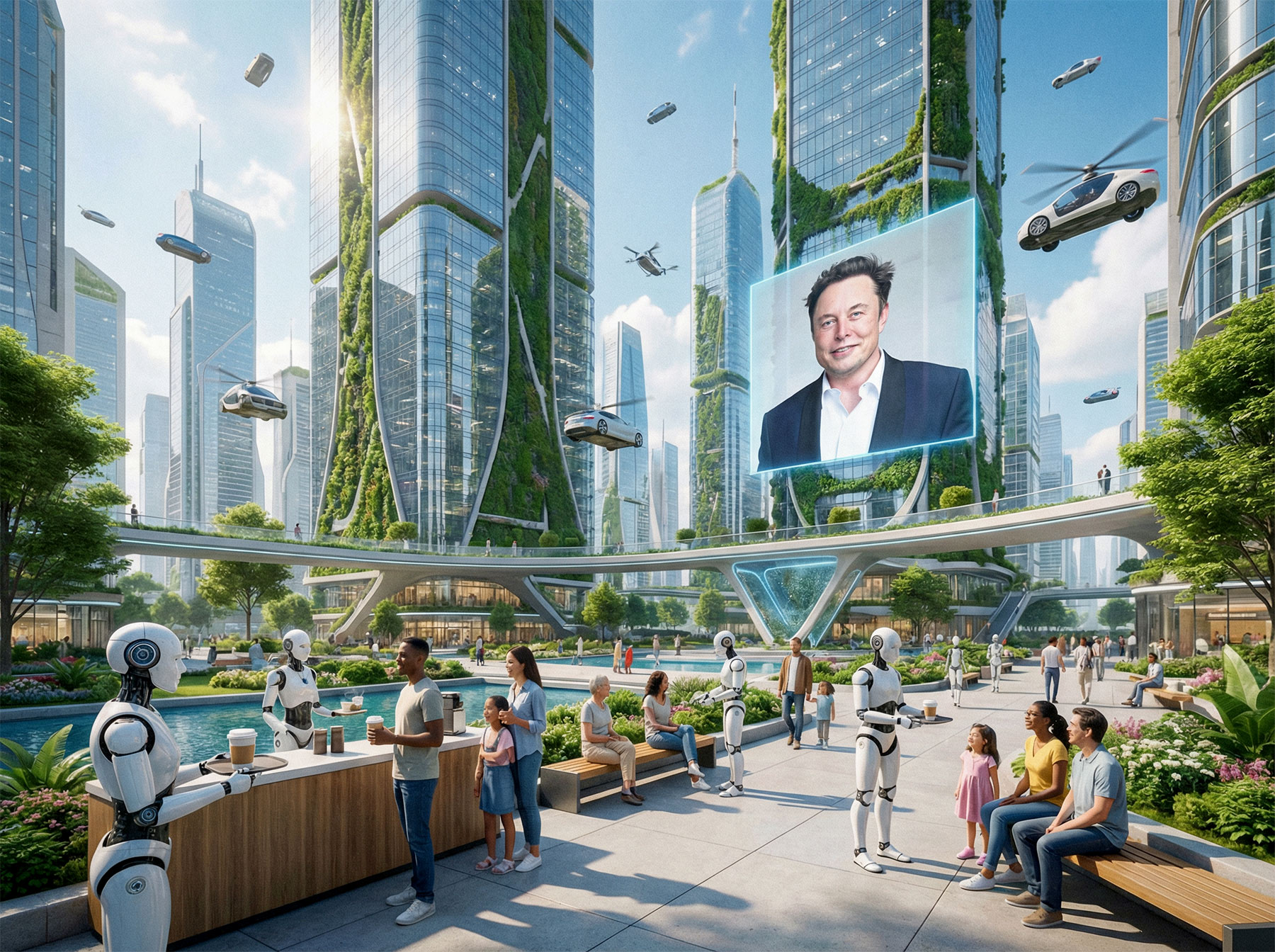
The remarks came during a conversation with investor and podcaster Nikhil Kamath that was published at the end of November. In that interview Musk repeated themes he has publicly discussed elsewhere: that humanoid robots and advanced AI could eventually eliminate scarcity, make work optional for many, and fundamentally change how economies allocate resources.
The headline debt figure Musk referenced — about $38.34 trillion — is a shorthand for the aggregate federal, state and local liabilities commonly reported in public debt trackers. That number is commonly quoted in media summaries of the current U.S. debt burden.
How he says it would work: productivity, money supply and deflation
Musk’s macro story is simple: if AI and robots massively raise the volume of goods and services produced while the monetary base does not increase as fast, prices would fall — deflation — and real output growth would outpace nominal money growth. In that scenario, GDP would expand so much that outstanding debt as a share of the economy would shrink, easing fiscal strain. He framed this as technological abundance making traditional scarcity‑based economics less relevant.
Why the mechanism sounds plausible — and where it runs into economics
At a high level the logic has academic backing: faster real output growth reduces the debt‑to‑GDP ratio, and productivity gains are the classic route to higher real growth. International organisations and fiscal researchers emphasize that growth, together with sustainable primary balances and manageable interest costs, is central to debt trajectories. Rapid, broad‑based productivity increases could therefore help stabilise or even lower debt ratios over time.
But macroeconomics is full of feedback loops. Central banks watch inflation and the money supply closely; if prices were to fall sharply because of a supply shock, monetary authorities might respond by loosening policy, which could offset deflationary pressure. There is also a tension known as fiscal‑monetary interaction: whether inflation or deflation helps or hurts government finances depends on interest rates, debt composition (nominal vs. inflation‑indexed), and the maturity structure of liabilities. In some regimes, surprising changes in the price level alter the market value of nominal debt and therefore affect fiscal sustainability in ways that are neither straightforward nor uniformly beneficial.
Critical complications the three‑year claim glosses over
- Time scales and deployment: Building and deploying advanced robotics and AI at national scale — across manufacturing, logistics, construction, healthcare and services — is capital‑intensive and takes years of investment, training and regulatory work. Translating laboratory and pilot gains into economy‑wide output is not instantaneous.
- Distributional effects: Even if aggregate output rises, the benefits may concentrate. Automation can increase GDP while leaving wage income for many workers stagnant or declining unless policy redistributes gains or creates new jobs in complementary sectors.
- Nominal debt dynamics: Large falling prices can raise the real burden of nominal debts in the short term, especially for borrowers with fixed liabilities — including some households and businesses — making financial stress and political backlash possible.
- Monetary responses: Central banks may react to deflation risks with policy that preserves price stability but undoes part of the deflation Musk imagines; the resulting interest rate path is crucial for debt servicing costs.
What economists and technologists are saying
Analysts and international fiscal institutions stress that growth is necessary but not sufficient. Debt sustainability depends on a combination of stable macro policy, predictable funding costs and credible plans for primary balances. Rapid productivity can help, but it cannot by itself solve political choices about spending, taxation and entitlements — especially under tight time constraints.
Robots, Optimus and the social dimension
Musk has singled out humanoid robots developed at his company as a tool to expand production and even reduce poverty. While such systems may prove transformative in particular tasks and industries, history shows that the social and institutional adaptation to automation — training, safety standards, labour market transitions and social safety nets — matters as much as the machines themselves. Whether a new technology helps reduce public debt depends on how its gains are taxed, shared and reinvested.
A realistic verdict
The core idea — that AI‑led productivity could improve debt metrics — is not fanciful. Major, permanent gains in output would change debt dynamics. But erasing a headline figure of tens of trillions of dollars in three years would require near‑instantaneous, economy‑wide jumps in productive capacity together with favourable interest‑rate moves and coordinated fiscal‑monetary policy — a confluence that is historically unprecedented and politically delicate. In short: technology can be a powerful component of any long‑term solution, but it is not a single‑handed instant remedy that removes fiscal choices or the need for public policy.
Why this debate matters
Public claims about AI and robots solving fiscal crises shape politics, investment and public expectations. As policymakers weigh budgets, entitlements and regulation, understanding the plausible economic channels — and the risks of uneven outcomes — will be critical. The discussion prompted by Musk’s podcast is useful because it forces a deeper confrontation between technological potential and fiscal reality; whether that confrontation leads to sensible policy or overhyped promises will determine how much of the theoretical promise actually reaches citizens.
For now, AI and robotics remain powerful levers for growth. Turning them into a rapid, wholesale cure for the country’s debt requires more than engineering: it requires time, broad‑based institutional responses and explicit policy decisions about how the gains are captured and shared.