Nearby ‘Super-Earth’ Candidate GJ 251 c Found in Star’s Habitable Zone
Discovery and data
The detection is based on more than two decades of observations from the Habitable Zone Planet Finder (HPF), a high-precision near-infrared spectrograph. Scientists attributed a periodic radial-velocity signal—a subtle stellar wobble caused by an orbiting object—to a planet in the system. Support for the project included funding from the U.S. National Science Foundation, NASA, and the Heising-Simons Foundation.
Planet characteristics
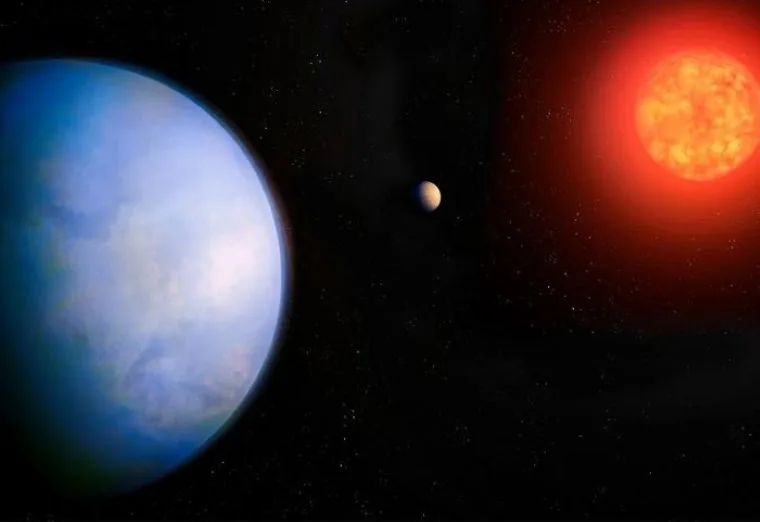
GJ 251 c is estimated to be approximately four times the size of Earth and lies within its star's habitable zone, the region where liquid water could exist on a planet's surface given suitable atmospheric conditions. Its relative closeness to Earth improves the prospects for direct detection and follow-up characterization.
Detection method and observational prospects
Directly measuring the planet's light would enable study of its atmospheric composition and searches for chemical signatures that could indicate biological activity. Scientists caution that identifying a true biosignature requires unambiguous atmospheric detection and careful interpretation: for example, the simultaneous presence of oxygen and methane is a biosignature on Earth, but its significance on another world depends on the planet's broader atmospheric and geochemical context.
Next steps and limitations
Current facilities cannot yet unambiguously detect or characterize the atmosphere of a habitable-zone rocky candidate like GJ 251 c. The research team says next-generation telescopes and continued community investment are needed to directly image the planet, determine whether it has an atmosphere, and search for possible biosignatures.