A bold claim, a complex path
On 3 January 2026, Elon Musk posted a short video on X saying he was "confident at this point that restoring full body functionality is possible with Neuralink." The comment — part advocacy, part technical pitch — sharpened public attention on a company that has moved from lab demonstrations to early human trials in the space of a few years. Musk framed the idea simply: read signals from the motor cortex and relay them past injured segments of spinal cord to restore voluntary movement. The statement landed amid separate company announcements about stepping up device production and automating implantation surgery next year.
What Neuralink has actually done so far
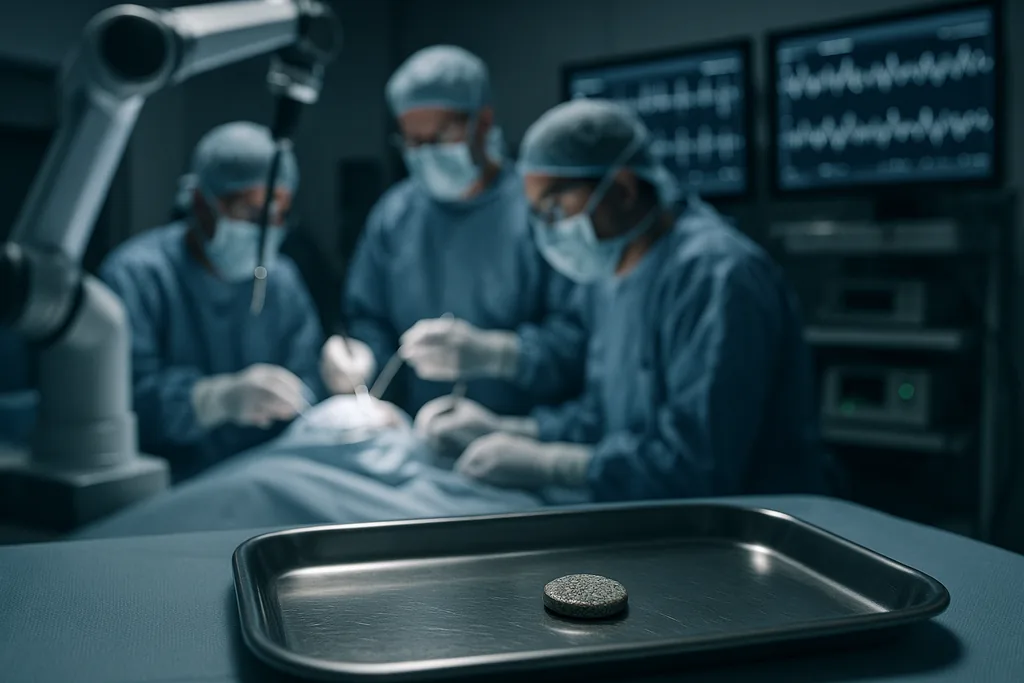
Neuralink's public milestones are concrete but cautious: the company began first‑in‑human implants in 2024 and has run an early feasibility study called PRIME, which places a wireless intracortical N1 implant into motor areas of the brain and uses a surgical robot to thread ultra‑thin electrodes. At least two clinical sites — Barrow Neurological Institute in Phoenix and later sites in the United States and Great Britain — have been involved in the PRIME programme, and the company has described patients using the implant to control cursors and simple applications by thought alone. Neuralink has also said it received a breakthrough device designation from the U.S. Food and Drug Administration for a device aimed at restoring speech and has discussed a vision‑restoration programme called Blindsight.
Alongside clinical progress, Musk and Neuralink have signalled an industrial push: the company has announced plans to scale to high‑volume production of implants and to move toward a mostly automated surgical workflow in 2026, including threading the device through the dura without removing skull bone. Those production and automation targets are operational aims rather than regulatory milestones.
The science behind the claim
At its core, the argument that a brain‑chip can restore movement rests on two linked ideas. First, the motor cortex still generates signals that represent a person's intention to move even when the spinal cord below an injury no longer conducts those signals to muscles. Second, a device that reads those cortical signals and either stimulates peripheral nerves, controls external actuators (robotic limbs, exoskeletons) or routes commands to downstream neural circuits could bypass the damaged pathway and re‑establish functional movement.
That logic has experimental precedent. Laboratories and small clinical teams have used intracortical arrays to decode intended movements and drive robotic arms or cursors; epidural stimulation and nerve‑stimulation techniques have elicited muscle contractions in some patients. What Neuralink proposes is to combine high‑channel, long‑term cortical recording with software decoding and either external hardware or targeted stimulation to recreate coordinated, voluntary motion. But "possible" in a physics or proof‑of‑principle sense is not the same as "practical, reliable and safe" for a broad population of patients.
Where the technical gaps remain
A number of hard technical problems must be solved before a claim of full‑body restoration becomes a clinical reality. Decoding: translating the messy, time‑varying electrical activity of the cortex into precise, multi‑joint motor commands requires machine‑learning models trained on rich datasets and decades of engineering refinement. Stability: electrodes implanted in cortex face biological reactions, signal drift and potential wire migration over years. Interface: bridging from decoded intention to reliable activation of muscles or spinal circuits — with natural timing, force control and sensory feedback — is itself an enormous control problem. Safety and durability: any implant must minimise infection, bleeding and hardware failure over years of use.
Neuralink has designed the N1 implant with many electrodes and a robotic insertion system intended to reduce surgical trauma, and the company reports early functional results in trial participants. But the step from limited digital control (cursor movement, basic device operation) to fluent walking or coordinated limb movement that integrates balance and sensory feedback would require breakthroughs on several fronts at once: sensing fidelity, adaptive control, peripheral stimulation technology and rehabilitative engineering.
Regulation, evidence and the meaning of "breakthrough"
Regulatory context is crucial. The FDA's Breakthrough Devices program is intended to accelerate development and review for devices that could offer substantial improvements for serious conditions, but designation is not market approval. It provides more interaction with regulators and potentially faster review pathways — it does not certify safety or long‑term effectiveness. Early human implants performed under investigational approvals are for data gathering; they do not establish that a device will work robustly across heterogeneous patients or that the benefits will outweigh risks in clinical use.
Neuralink's own path has also been subject to scrutiny. Regulatory inspections and reporting have highlighted lapses in laboratory practices during animal studies that raised questions about data reliability and adherence to standards. Those records, and subsequent scrutiny from investigators and advocacy groups, underline why regulators demand systematic evidence before widespread use is permitted. Translating a promising early feasibility signal into a broadly applicable therapy requires reproducible, peer‑reviewed results and long follow‑up for safety.
What a realistic timeline might look like
Predictions about timing vary dramatically depending on how one weighs engineering progress, regulatory timelines and clinical complexity. Neuralink's stated industrial milestones — higher‑volume device manufacturing and a less invasive, largely automated procedure by 2026 — speak to the company's internal roadmap. But wide clinical availability for complex motor restoration, if it ever arrives, will likely take many years longer: controlled, multi‑centre trials, device refinements, demonstration of durable benefit for everyday tasks and post‑market surveillance. Historical experience with invasive neurotechnology suggests that incremental, iterative advances across hardware, software and rehab practice are the norm rather than sudden, universal cures.
The human stakes
For people with paralysis, the promise of restored mobility is life‑changing. That promise is precisely why the field attracts intense investment and attention — and why cautious, transparent clinical science matters. Enthusiastic public statements can inspire hope and speed funding, but they can also compress expectations and place pressure on patients and regulators to move faster than evidence supports. The careful middle path is to accelerate rigorous trials while making clear what has been demonstrated and what remains speculative.
Neuralink's recent remarks underline an important reality: from an engineering and physics perspective, many of the components required for bypassing damaged spinal pathways can be assembled. Turning that physical possibility into something that safely, reliably restores everyday movement for a broad range of patients is a different and much longer task — one that will be won or lost in clinical data, not in headlines.
Near‑term signs to watch
- Data releases from the PRIME trial sites describing decoding performance, functional outcomes and adverse events.
- Regulatory filings and FDA interactions that clarify the scope of any expedited reviews.
- Independent peer‑reviewed publications and external confirmations of long‑term implant stability and patient‑reported outcomes.
For now, Musk's statement is best read as a confident prediction rooted in the company's recent technical steps and an invitation to accelerate engineering and clinical validation. The physics may not forbid full‑body restoration — but medicine and public policy will demand proof. That proof will arrive slowly, through trials, publications and regulator‑supervised evaluation, and until it does the phrase "possible" should not be conflated with "proven."
Sources
- Neuralink (company materials and PRIME study announcements)
- U.S. Food and Drug Administration (Breakthrough Devices program and related regulatory guidance)
- Barrow Neurological Institute (PRIME study site information and press materials)
- (PRIME study registration)
- University College London Hospitals NHS Foundation Trust (GB‑PRIME study site approvals)