Lede: a restart at sea
The agreement and the plan
Malaysia’s cabinet approved a private search proposal earlier in 2025 and the new mission is being carried out on a "no‑find, no‑fee" basis: Ocean Infinity will be paid only if it locates substantive wreckage. Public reporting around the deal has cited a headline figure of about US$70 million payable on a verified find, and the company will scan roughly 15,000 square kilometres (about 5,800–6,000 square miles) in the targeted area identified by recent analyses. The choice of a contingent, performance‑based contract reflects both political sensitivity about public spending and a desire to keep the search limited to where the data say it is most likely to succeed.
Where this search sits in the long timeline
Technology on the job
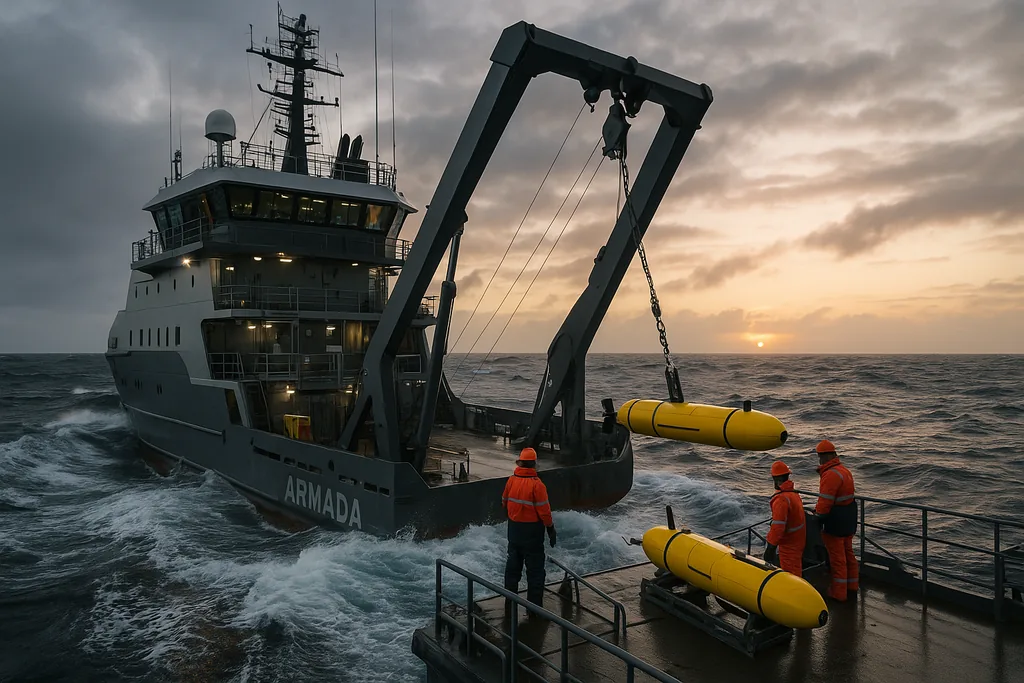
Ocean Infinity will deploy autonomous underwater vehicles (AUVs) and other robotic systems from a mothership in order to map the seabed at resolutions far higher than previous wide‑area surveys. The company’s Armada‑class vessels carry multiple AUVs capable of side‑scan sonar, 3‑D bathymetry and magnetometer surveys; promising sonar contacts can be re‑visited with remotely operated vehicles (ROVs) for visual inspection. The fleet and sensor suite are designed to operate at depths of several thousand metres and to work intermittently according to weather and sea state. Industry and press descriptions emphasise that improvements in AUV autonomy, sensor resolution and data‑processing pipelines since 2018 are the technical reasons proponents cite for renewed optimism.
Why now: new data, new windows
The decision to relaunch a private search rests on two linked claims: first, that revised analyses of the satellite record, debris drift patterns and other inputs have narrowed a credible high‑probability area; and second, that the southern hemisphere summer — when seas are calmer in the chosen sector — offers a safer operating window. Malaysian authorities and Ocean Infinity say the proposed search area is far smaller than earlier official searches and was selected after fresh expert review. That tighter geometry both reduces time at sea and concentrates effort where side‑scan and magnetometry have a realistic chance of locating wreckage.
What the robots look for and what finding them would change
At seabed depths where this search will operate, robots look for metal shapes, anomalous reflectivity and geometric signatures consistent with aircraft structure rather than natural rock. A confirmed find of large wreckage would enable recovery teams to attempt retrievals of major sections and, crucially, the aircraft’s flight recorders if located relatively intact — the black boxes are protected by crash‑survivable beacons but their batteries and signals decay with time. Recovering flight recorders or significant airframe sections would be the only way to answer central questions about the plane’s final hours, including whether the loss of aircraft systems was accidental or involved intentional human action.
Technical and oceanographic challenges
The southern Indian Ocean is deep, cold and geologically varied. Bathymetric complexity — steep slopes, gullies and ridges — can create acoustic shadows that hide wreckage from side‑scan sonar and can prevent AUVs from running ideal survey lines. Ocean currents over years have also dispersed surface and small debris items, meaning that the few fragments found on African and island coastlines since 2015 are hard to invert precisely back to a crash site. Those drift studies — many performed by CSIRO and other oceanographic groups for earlier investigations — remain essential to constraining where to look, but they do not yield exact coordinates and always carry substantial uncertainty. Search teams thus combine high‑resolution mapping with probabilistic models rather than a single deterministic target.
Families, politics and fiscal risk
For the families of those aboard MH370, the renewed hunt is a fraught mixture of hope and exhaustion. Governments have long faced pressure to either keep spending on searches or to declare the matter closed; a private, no‑find‑no‑fee approach reduces taxpayer risk while signalling political willingness to act. Officials in Kuala Lumpur have framed the operation as an effort to provide closure rather than to re‑open blame; the contingent contract aims to align incentives so the company only receives significant payment on demonstrable success. Still, even successful detection does not guarantee immediate retrieval — complex deep‑sea salvage operations can be expensive and technically demanding, and further government decisions would be required before full recovery work could begin.
Odds and expert caveats
Experts who have followed MH370 for years caution that locating the wreckage is far from certain. The long time elapsed since 2014, the limited original telemetry, and the small number of debris finds mean that even a focused 55‑day scanning campaign may come up empty. Ocean mapping and data‑review workflows reduce false positives but cannot eliminate the possibility of ambiguous contacts that require revisits. In past searches, promising contacts have sometimes turned out to be geological features; conversely, critics note that re‑examining areas previously surveyed with modern analytics has on occasion revealed overlooked anomalies. The search is therefore best described as a technically plausible, but not guaranteed, attempt to reduce uncertainty.
What to watch next
In the coming weeks the public should expect a slow, methodical cadence: AUV sorties, initial sonar mosaics, and occasional announcements when a contact is elevated to priority‑inspection status. Ocean Infinity and the Malaysian government have said formal communications about any discoveries will come through official channels. Independent observers and families will watch for third‑party verification of any claimed finds, as the contract structure and the stakes make transparent verification essential. If nothing is found this season, the international MH370 research community will likely press for either a renewed search with different geometry or for publication of the analytic work that led to the choice of the current search area.
A long mystery still at sea
Eleven years after the jet disappeared, the renewed deployment of deep‑sea robots is a reminder that technological progress can reopen old questions — and that, for some mysteries, patient, iterative measurement is often the only realistic course. Whether this mission yields wreckage, new data or further constraints, it will add another chapter to the long and costly international effort to locate MH370 and to give the families a firmer answer about what happened on that March night in 2014.
Sources
- Malaysian Ministry of Transport (official government statements on the MH370 search)
- Australian Transport Safety Bureau (Operational Search for MH370 and related reports)
- Defence Science and Technology Group (DSTG) analyses and publications related to satellite data for MH370
- CSIRO ocean drift modelling reports used in MH370 debris analyses