One‑Shot Gene Editor Targets Nonsense Mutations
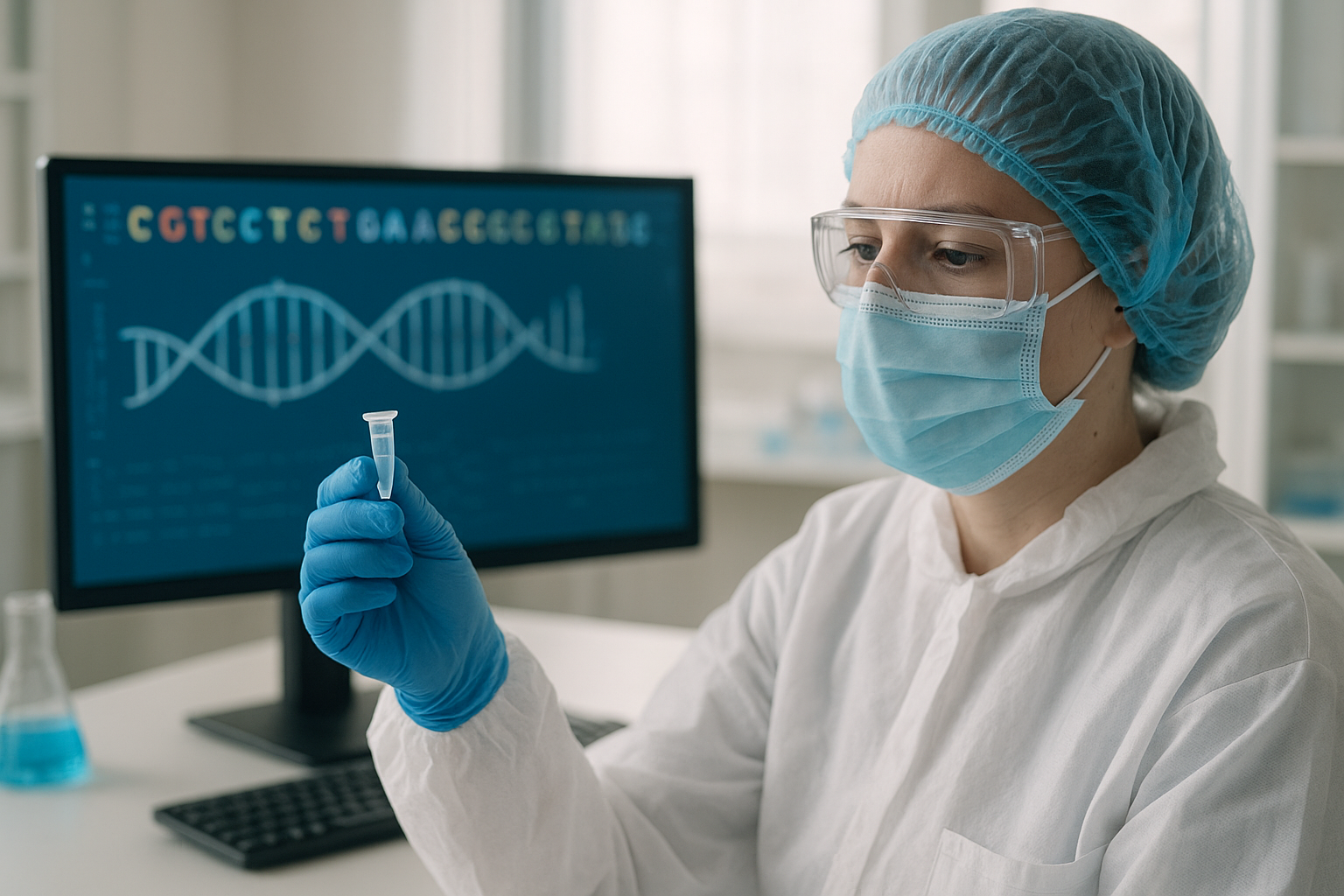
A single tweak that could help millions
The idea is strikingly practical. Nonsense mutations are implicated across many inherited disorders; the new paper argues they are involved in tens of millions of disease cases worldwide. In cell cultures and in mice, a single genomic insertion of PERT raised levels of working protein by tens of percent for a range of targets, and produced measurable clinical benefit in an animal model of Hurler syndrome. Because the engineered instructions are put into the genome of treated cells, the treatment is theoretically one‑and‑done rather than requiring repeated dosing.
Mechanics of a suppressor: how PERT works
PERT uses a classical molecular trick called nonsense suppression but implements it in a permanent, programmable way. The team screened thousands of transfer RNA (tRNA) variants to find scaffolds that could be converted into suppressor tRNAs — molecules that will insert an amino acid at a stop codon and allow the ribosome to continue translation. Crucially, the researchers used prime editing, a newer, highly precise gene‑editing modality, to rewrite endogenous tRNA genes into these suppressor forms and insert them into the genome of treated cells.
In practical terms that means treated cells continuously make the engineered suppressor tRNA. When the ribosome encounters the engineered stop signal — the Liu team focused on one stop codon, UGA — a suppressor tRNA can supply an amino acid and the ribosome can complete the protein. In cell models across several disease genes the single treatment boosted full‑length protein levels by roughly 20–70 percent, and in a mouse model of Hurler syndrome the therapy produced an 8 percent increase in the deficient enzyme that nevertheless reduced pathological substrate accumulation and improved symptoms within weeks.
Promises and practical limits
PERT’s selling point is breadth. In a screen of more than 14,000 mutated stop codons the system bypassed the defect in roughly 70 percent of cases, suggesting the approach could apply to many different genes and disorders that share the same molecular fault. That is a very different strategy from the current, highly bespoke model in which each disease needs its own designer therapy.
But the approach is not a universal cure. Suppressor tRNAs do not necessarily restore an original amino acid, and inserting a different residue at the site of a premature stop can alter a protein’s 3‑D fold, stability, or interactions. For some proteins a single substitution may be harmless or even benign; for others it could be neutral at best or harmful at worst. The PERT team and outside commentators note it is unlikely a single engineered tRNA will fully restore function for every protein harboring a nonsense mutation.
Other open questions are technical and clinical: PERT so far was demonstrated mainly for one stop codon (UGA) and in selected cell types and mouse tissues. Different organs require different doses and delivery strategies; a dose that works in liver may be ineffective or toxic in heart or lung. And although prime editing is more precise than many older tools, any genomic insertion raises classical safety concerns such as off‑target edits or insertional events that must be evaluated in longer‑term animal studies before human testing.
How PERT fits into the shift toward in‑vivo, one‑shot therapies
PERT arrives amid a wave of work aimed at making gene therapy simpler and more durable. In 2025 several notable advances showed different ways to approach the same goal: reach disease‑causing cells in the body and fix them with a single intervention. Early‑life in‑vivo editing of blood stem cells demonstrated that a carefully timed intravenous shot to newborn mice could edit circulating hematopoietic stem cells and reverse multiple blood disorders without the need for extracting and re‑infusing cells. Separately, teams working on mitochondrial DNA devised new base editors that rewrite mtDNA nucleotides inside organelles, tackling an entirely different class of inherited diseases.
Safety, delivery and the road to patients
No platform moves from mouse to bedside without a long list of preclinical checks. For PERT those include: rigorous long‑term studies to track off‑target prime edits and genomic stability; tissue‑specific delivery optimization so dosing can be tailored to organs where the defective protein matters; immune profiling to check whether the new tRNA or the editing machinery provokes harmful responses; and functional assays to confirm that the proteins produced after suppression are safe and sufficiently functional in a physiological context.
Regulators will scrutinize both efficacy and durability but also unintended consequences that could affect many cells for years. Because PERT relies on genomic insertion, the conversation will naturally focus on safety margins more than for transient, non‑integrating therapies.
Finally, there are equity and access questions. A platform that can treat many rare diseases more cheaply and with fewer clinic visits would be transformative — but developing, manufacturing and distributing a new class of genomic medicines still costs a lot. If PERT or similar approaches reach the clinic, their societal impact will depend on how regulators, payers and manufacturers steward development and pricing.
Outlook: a versatile tool, not a magic bullet
PERT is an elegant example of the field’s current direction: engineers hunting for general solutions that shift the unit of work from the single gene to the class of mutations. If the method proves safe in long‑term animal studies and can be adapted to effective delivery systems for human tissues, it could shorten development timelines and broaden therapeutic reach for many conditions that today have no treatment.
Sources
- Nature (research paper on PERT prime‑editing suppressor tRNA)
- Harvard University (David Liu laboratory)
- Broad Institute (gene‑editing research and methods)
- Nature (in‑vivo neonatal hematopoietic stem‑cell editing study, IRCCS San Raffaele)
- Science Translational Medicine (mitochondrial base‑editing research)