Proteus Launches First AI‑Designed Spacecraft
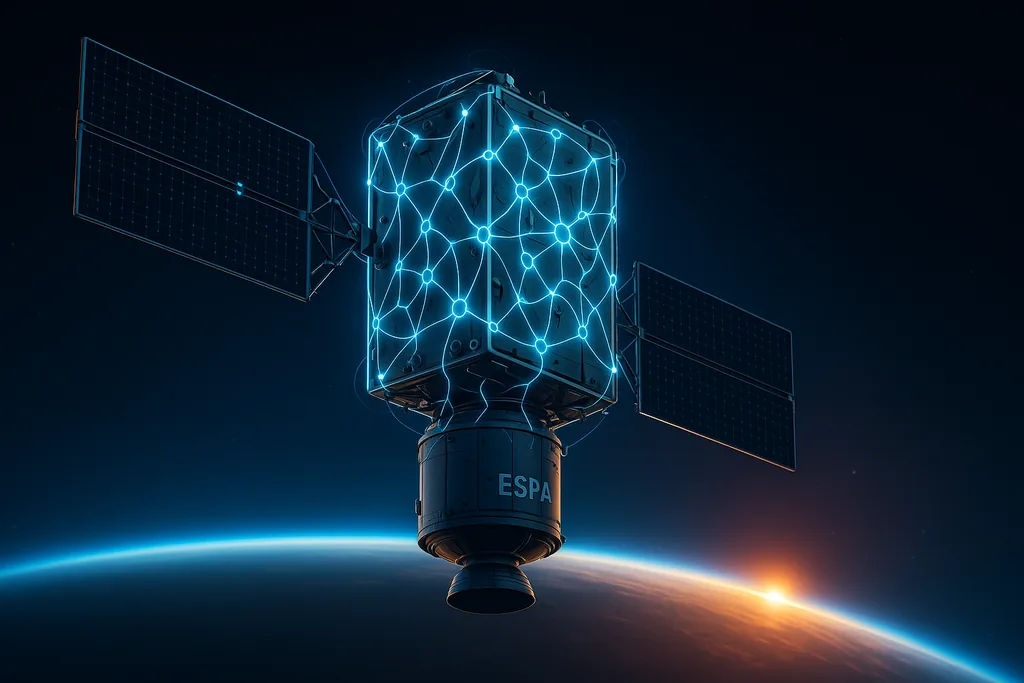
AI goes from drawing board to orbit in nine months
Proteus Space announced the successful launch and first contact of MERCURY ONE, its inaugural four‑payload ESPA‑class spacecraft. The company says the vehicle moved from a blank‑sheet concept to a launch‑qualified satellite in just nine months — a timeline its executives describe as unprecedented for a craft of that size and complexity.
What Proteus did — and how
At the centre of the story is MERCURY, Proteus's AI‑enabled engineering platform. Proteus characterises MERCURY as a patent‑pending, physics‑anchored, multi‑objective, rapid concurrent engineering system that automates and accelerates many steps of satellite design, validation and test.
According to the company, MERCURY produces payload‑tailored spacecraft definitions, generates manufacturable hardware packages and produces hardware‑in‑the‑loop (HIL) validation artefacts — all on compressed schedules. MERCURY ONE was developed, integrated and readied for launch under a contract with innovation arm SpaceWERX and the Air Force Research Laboratory's Space Vehicles Directorate, giving the mission operational flight heritage at Technology Readiness Level 9.
Partners and payloads
MERCURY ONE carried experiments and payloads from several collaborators, including a team from a leading jet propulsion laboratory, academic researchers and industry partners. One industry partner highlighted the platform's responsiveness: they were able to add a radio experiment late in the schedule without derailing the launch date.
Not just software: validation and data rights
Proteus emphasises that MERCURY is not a black box. The company describes the platform as deterministic and physics‑anchored, and says it delivers full design packages and HIL validation within abbreviated timelines. It also stresses that customers obtain non‑proprietary, vendor‑agnostic design definitions and "unlimited data rights" to the resulting specifications — positioning the platform as a way to avoid supplier lock‑in while scaling production.
Those claims are strategically important. If customers truly receive complete, vendor‑agnostic design documentation with unrestricted rights, that could lower barriers for mission owners seeking to reproduce or modify systems. But the industry will watch closely to see whether the promised documentation and validation are delivered at the fidelity needed for safety‑critical missions.
Part of a broader industry shift
Proteus's milestone fits into a wider pattern: startups and established firms are pushing for faster turnaround, more reusable systems and increased automation in satellite design and operations. Some companies are raising seed capital to demonstrate reusable spacecraft; others are contracting to build fleets for specialised tasks such as on‑orbit cybersecurity. Academic work is also exploring AI tools that let satellites monitor and predict their own health in real time.
Taken together, these developments point toward a future where satellite capabilities become more elastic — scaled up, reconfigured and launched more quickly to respond to demand. For commercial customers and national space programmes, that elasticity is attractive: it promises lower cost and faster iteration on space capabilities.
Questions and risks
Speed and automation bring opportunity, but also new challenges.
- Verification and trust: AI‑driven design tools can explore design spaces far faster than humans, but regulators and operators will demand rigorous evidence that automated outputs meet safety margins. Hardware‑in‑the‑loop tests and flight heritage go a long way, but single flights are not the same as broad statistical validation.
- Supply chain and manufacturing: Rapid design cycles still need reliable manufacturing and test capacity. Compressing schedules can shift risk into suppliers, subsystems and integration steps; how those partners are coordinated will determine whether speed produces robust outcomes.
- Security: Automated design and software platforms raise questions about intellectual property protection, access control and the resilience of design pipelines to tampering.
What's next
Proteus plans to offer a beta software‑as‑a‑service version of MERCURY for commercial and government customers within the coming year. If the platform scales as advertised, it could change procurement patterns: organisations might order mission‑specific spacecraft more like cloud capacity than long custom programmes.
Bottom line
MERCURY ONE is an important proof point for automated spacecraft design: it highlights the potential to slash development time, accept late payload changes and deliver launch‑ready systems on compressed schedules. The flight does not remove the hard work of verification, supply‑chain management and operational assurance, but it raises the bar for how quickly a mission can move from concept to orbit — and that speed could reshape who gets to launch, how missions are bought, and how rapidly space capabilities evolve.
For engineers, policymakers and customers alike, the next phase will be about turning a promising flight demonstration into predictable, auditable practice that serves both innovation and safety, and that balances the benefits of machine speed with the rigour that spaceflight demands.