Silicon Valley’s Push to Edit Embryos
How a tech-funded startup forced the debate back into the spotlight
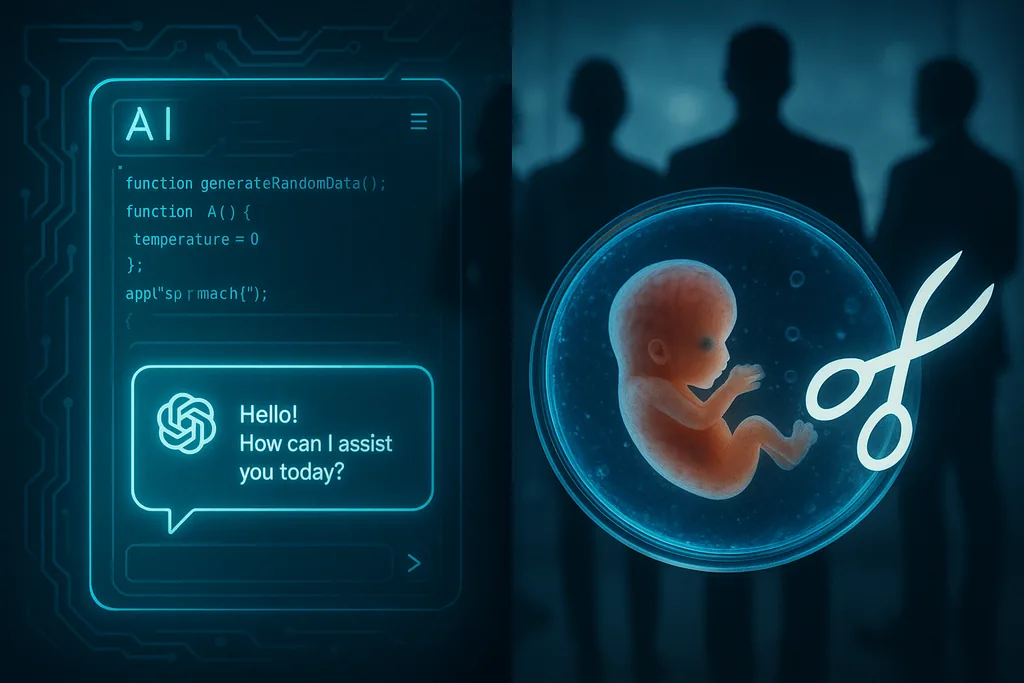
In November 2025 a Wall Street Journal investigation revealed that a small San Francisco company called Preventive has raised substantial backing to research editing human embryos — a line of work that is banned for clinical use in the United States. Among the reported backers are prominent figures in Silicon Valley, including the chief executive of a major AI company and other high‑profile technology investors who see embryo editing as a way to prevent hereditary disease.
Who is involved and what they say they want
Preventive, which incorporated earlier in 2025, has said its stated goal is to research whether gene edits made before birth could safely eliminate devastating single-gene conditions. The company has positioned itself as a public‑benefit corporation and announced a multimillion‑dollar funding round; founders and backers argue the work would be focused on safety and on preventing disease rather than cosmetic or enhancement applications. Reporting has identified specific investor names and described private discussions among tech backers about embryo editing and embryo selection.
Why some investors are pushing ahead
Supporters frame embryo editing as an extreme but potentially decisive route to prevent conditions that today require lifelong treatment or organ transplants. Proponents point to rapid progress in somatic (non‑heritable) gene therapies and say the technology may eventually be capable of safe, precise edits at the embryonic stage when an organism consists of only a few cells. Investors argue that, done responsibly, early edits could spare children—and generations—cumulative suffering from inherited disease.
Where the science actually is: a recent medical milestone
The technical context is important. In 2025 clinicians in the United States reported a milestone in personalized gene therapy: an infant with a rare, life‑threatening metabolic disorder received a bespoke CRISPR‑based treatment that corrected a harmful mutation in his liver cells and produced rapid clinical improvement. That case involved somatic editing of existing tissues and was presented as the first personalized CRISPR therapy in a patient, not as germline or embryonic editing — a critical distinction because somatic edits do not pass to descendants. The success underlines how fast gene technologies are advancing, while also reminding us how different therapeutic and reproductive applications are in both risk and regulatory treatment.
Technical risks that make germline editing especially fraught
- Off‑target edits: CRISPR systems can accidentally alter DNA at unintended sites, with unpredictable consequences.
- Mosaicism: editing at very early stages can produce embryos made of a mix of edited and unedited cells, complicating outcomes.
- Antagonistic pleiotropy and unknown trade‑offs: changing one gene may disrupt other beneficial effects that gene carries.
- Heritability: germline edits are permanent in a family line; mistakes can be multiplied across generations.
Because of these biological uncertainties, many leading ethicists and scientists say the current risk‑to‑benefit ratio does not justify attempting heritable human genome edits in pregnancies. Some have used frank language to describe the field’s state, arguing that it would be irresponsible to move to clinical applications until safety can be demonstrated by a much broader body of evidence.
Regulation, jurisdiction shopping and the global patchwork
One reason Preventive and similar projects attract scrutiny is regulatory: in the U.S. federal law prevents the regulator from approving clinical trials that would implant genetically edited embryos. That legal barrier has led some teams to consider doing research in countries with different rules — a practice critics call "jurisdiction shopping." The He Jiankui episode in 2018, when a researcher in China illegally implanted edited embryos and was later convicted, remains the cautionary tale that haunts the conversation.
Commercial pressures and the 'designer baby' conversation
Beyond a single company, the market for embryo testing and selection has been growing: firms now sell polygenic embryo screening and other predictive services that attempt to rank embryos for disease risk or complex traits. Those commercial paths blur into the same social questions raised by embryo editing: who decides which traits are desirable, who pays for access, and what happens to children and societies if genetic differences reflect wealth and power? Critics warn that a private, investor‑driven push could accelerate social inequality and normalize reproductive choices that have profound collective implications.
How scientists and ethicists are responding
Some prominent scientists have criticized the motives and framing of marquee investors; others emphasize the need for rigorous, transparent research into safety before any clinical use is contemplated. Many call for public deliberation, stronger international norms, and robust regulatory checks — not secrecy or business strategies that seek to pre‑empt oversight. At the same time, proponents insist that research can be pursued ethically if it is open, closely supervised, and aimed at preventing severe disease rather than aesthetic enhancements.
What to watch next
- Will Preventive and peers publish preclinical safety data and independent replication?
- Will any country change regulation to allow embryo‑editing trials, and under what ethical guardrails?
- How will international scientific bodies, funding agencies, and professional societies respond if private trials are proposed overseas?
- Will public debate and democratic institutions shape access and limits, or will market forces define the technology’s first uses?
None of these questions have easy answers. The combination of rapid technical progress, deep clinical need for some families, and powerful private money creates both opportunity and real risk. If the goal is to spare children from severe inherited disease, the conversation must be governed by transparent science, inclusive public deliberation, and international safeguards that prevent hasty, irreversible choices.
Mattias Risberg is a Cologne‑based science and technology reporter for Dark Matter. He holds an MSc in Physics and writes on semiconductors, space policy, and data‑driven investigations.