Watch NASA Reveal Images of 3I/ATLAS
What’s happening and when
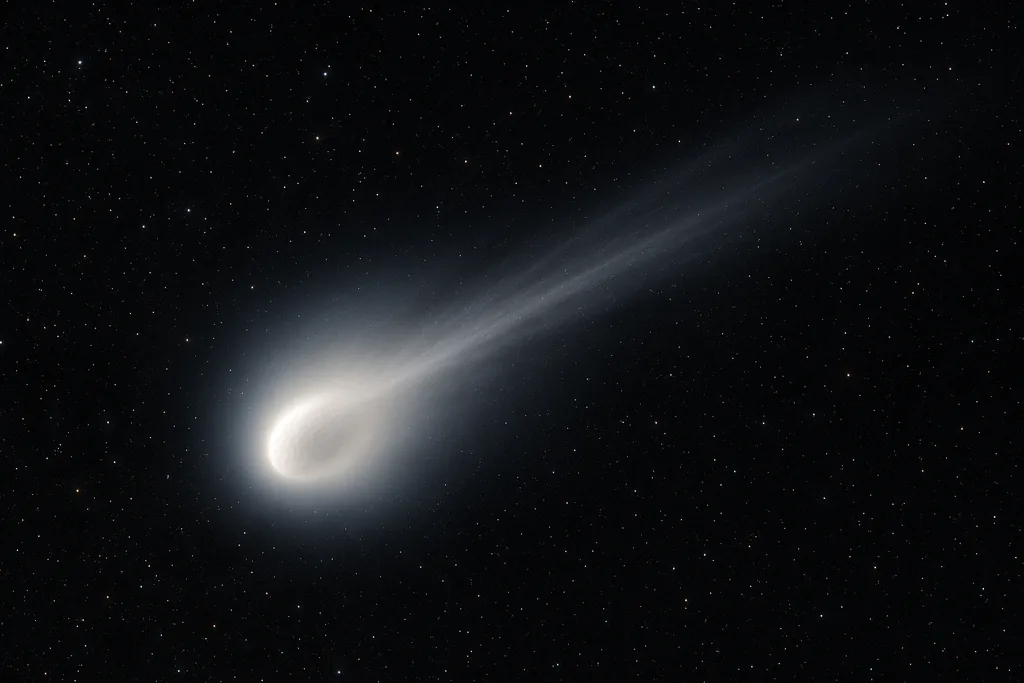
NASA will present new imagery of the interstellar comet 3I/ATLAS at a live media event on Wednesday, Nov. 19, 2025 at 3:00 p.m. Eastern Standard Time (Nov. 19, 2025 — 20:00 UTC). The briefing will originate from NASA’s Goddard Space Flight Center and will be carried across the agency’s streaming platforms. The agency named the senior science officials who will participate and said the images come from a suite of space- and ground-based assets used to follow the object as it passed through the inner solar system.
To watch live: check NASA+ (the agency’s streaming service and app), NASA’s website and YouTube channel, and the Amazon Prime channel that carries NASA programming for the scheduled start time. Members of the public will also be able to submit questions during the broadcast using NASA’s social channels and the event hashtag.
Why the images matter
3I/ATLAS is the third confirmed interstellar visitor on record — after 1I/‘Oumuamua and 2I/Borisov — and it behaves like a comet, with an active coma and a developing tail. Because it originated around another star, each new observation probes chemistry and structure that can differ from objects formed in our own solar system. High-resolution images let astronomers separate the bright coma from the much smaller nucleus, reveal jets and asymmetric outgassing, and provide context for spectroscopic measurements of the gases being released.
Which spacecraft and telescopes took the pictures?
What Webb found
Spectroscopic imaging with Webb’s near-infrared instruments showed that 3I/ATLAS emits a surprisingly large amount of carbon dioxide relative to water — a ratio far higher than typical Solar System comets at comparable distances. That CO2 signal is one of the reasons the object attracted intense follow-up: the mix of volatiles speaks to the environment where the comet formed and the processing it endured during billions of years in interstellar space. Webb’s data also detected traces of water, carbon monoxide and other minor species, plus dust and ice grains.
What Hubble and ground telescopes showed
Hubble’s optical frames resolved the coma and the early development of a tail and sunward plume, helping teams constrain dust speeds and the geometry of outgassing. Large ground observatories — including survey facilities that provided pre‑discovery images — extended the time baseline and captured evolving tail features as the comet made its closest approach to the Sun and passed near Mars earlier this autumn. Those combined imaging campaigns are precisely the sort of multi-angle, multi-wavelength view NASA says it will highlight on Nov. 19.
How big is 3I/ATLAS?
Size estimates for the solid nucleus remain uncertain because a bright coma can hide the true nucleus in images. Hubble-based analyses place an upper limit on the nucleus diameter of a few kilometres, while other datasets — including deep precovery frames from wide surveys — have generated larger numbers for the apparent size of the bright coma and, in one case, a much larger nucleus estimate. NASA’s consolidation of Hubble and follow-up work frames the nucleus size as constrained but still ambiguous: the best current bounds put the diameter somewhere from several hundred metres up to a few kilometres, depending on assumptions about reflectivity and how much of the measured brightness comes from dust rather than the solid body. The agency’s FAQ page and published observational studies summarise these limits and the remaining uncertainties.
What scientists hope to explain at the briefing
- Composition: confirmation and interpretation of Webb’s CO2-rich coma and what that tells us about the comet’s formation zone and thermal history.
- Activity and structure: how jets, plumes and the tail evolved as the object approached and receded from the Sun, and whether non-gravitational forces from outgassing altered its trajectory.
- Size and nucleus constraints: updates from high-resolution imaging and modelling that tighten the range of possible nucleus sizes.
- Comparisons with earlier interstellar visitors: assessing similarities and differences with 1I and 2I to understand the diversity of material coming from other star systems.
How to prepare and what to watch for
If you plan to watch the live event, consider these quick tips:
- Set a reminder on NASA’s YouTube channel or in the NASA+ app for 3:00 p.m. EST on Nov. 19, 2025 (20:00 UTC). For U.S. time zones, that’s 12:00 p.m. Pacific, 2:00 p.m. Central, and 1:00 p.m. Mountain.
- Listen for specific instrument names — when presenters say Webb, Hubble, SPHEREx, TESS or a named ground observatory, they’re pointing to the wavelength or vantage point that produced the result.
- Watch for annotations and comparison frames; agencies often show the same field in multiple wavelengths to highlight different features (dust vs. gas vs. ice).
- If you want to ask a question during the broadcast, use the event hashtag and the agency’s social Q&A channel as announced in the advisory.
Why the public should care
Interstellar objects are rare and scientifically precious: each one carries chemical and structural information from another star system and, therefore, offers a direct way to compare planetary-building materials across the galaxy. High-quality images are not just spectacular visuals — they are the raw data researchers use to measure composition, test models of comet activity, and infer how these bodies formed and evolved long before our Sun existed. The Nov. 19 briefing will bundle imagery and interpretation so scientists and the public alike can see what makes 3I/ATLAS both familiar and strange.
For anyone curious about the night sky, the broadcast is a front-row seat to modern observational astronomy: a coordinated program of telescopes delivering a stream of complementary information that together builds a much fuller picture than any one instrument could provide.
We’ll be watching the briefing and reporting any major results and context as the agencies release them.