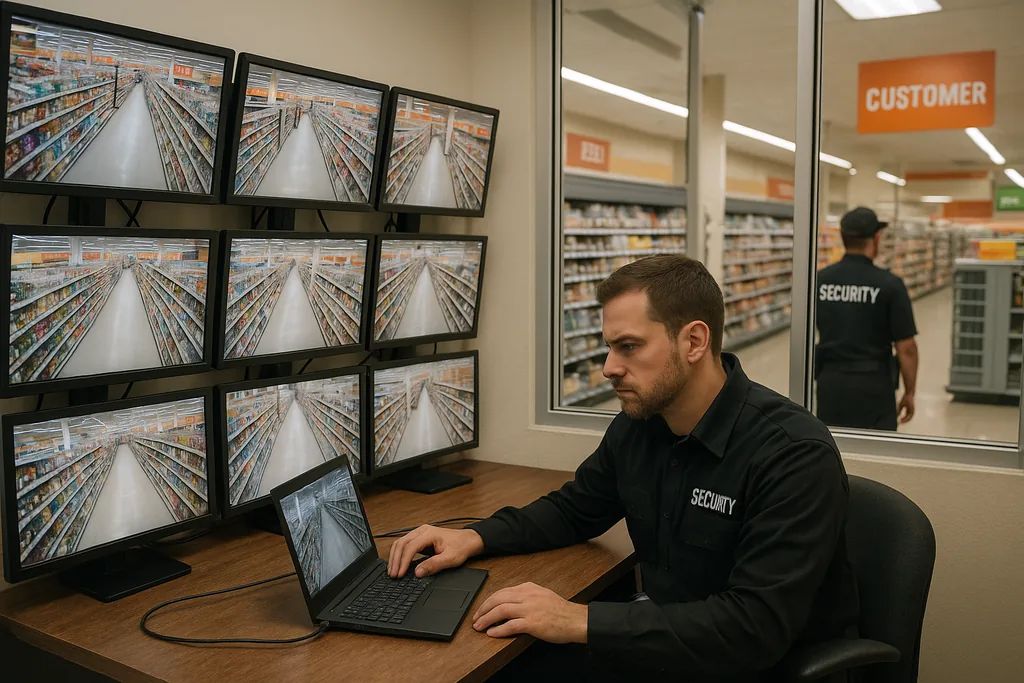
A shifting security posture at Wegmans
In 2025 Wegmans has quietly been beefing up its loss-prevention operations — hiring dedicated store security and loss-prevention specialists and expanding teams that monitor safety and shrink across its stores. Public job listings show openings for store security specialists and loss-prevention officers, signaling investment in personnel as a primary route to deter theft.
The company’s operational decisions over the last few years help explain why. Wegmans once offered a phone-based self-scan checkout app that customers used to scan items as they shopped; the chain discontinued the program in 2022 after reporting persistent losses tied to misuse. That choice — to pull back a convenience feature because it increased shrink — illustrates a broader trade-off retailers face between convenience and security.
How facial recognition is used in stores
When retailers talk about facial recognition they normally mean one of two technical patterns: offline review of footage to help identify repeat offenders, and live watchlist matching that generates real‑time alerts when a person of interest enters the store. Vendors advertise systems that can compare faces from in‑store cameras against curated watchlists — for example, lists of people linked to previous thefts or organized retail crime — and then notify designated staff. Grocery chains and other retailers have contracted with specialist vendors to implement these kinds of systems.
In practical deployments the software is rarely a fully autonomous decision-maker. Retail operators describe workflows in which an algorithm flags a potential match and a trained human investigator or store security staff reviews the footage and decides whether to act. Vendors and some loss‑prevention researchers argue this combination speeds investigations and can connect incidents across multiple stores more quickly than manual methods alone.
Accuracy, bias and real‑world errors
Independent testing and academic audits show facial recognition systems are not uniformly accurate. The U.S. National Institute of Standards and Technology (NIST) has documented wide variation between algorithms and clear differences in error rates across age, sex and skin‑tone groups. Those demographic differentials mean some people are more likely than others to be misidentified by certain systems.
Earlier academic work brought this problem to public attention. The Gender Shades study — a seminal audit of commercial systems — demonstrated that a number of widely used commercial classifiers performed far worse on darker‑skinned women than on lighter‑skinned men. That finding helped spark broader scrutiny of training data, deployment practices and vendor claims. In short: a low headline accuracy number can hide substantial disparities in who the algorithm reliably recognises.
Laws, signage and corporate risk
The legal landscape for biometric and face‑matching technology is patchy in the United States. Some cities and states have introduced rules that restrict private use of facial recognition in public accommodations, require conspicuous notice to customers, or impose consent and retention obligations for biometric identifiers. Retailers operating across jurisdictions must navigate a growing patchwork of local laws and state statutes that regulate collection, notice and use of biometric data.
Litigation risk is real. Courts and regulators have already heard cases alleging that stores failed to disclose biometric data practices or used facial‑matching systems without adequate notice to shoppers. Those disputes highlight two operational realities: (1) visible, readable signage and clear policies reduce surprise and legal exposure; and (2) the way a retailer describes its purpose — theft prevention versus marketing or personalization — matters for how laws and judges treat the practice.
Five facts to keep in mind about facial recognition in stores
- ‘Match’ does not equal conviction. Algorithms return similarity scores or alerts; human reviewers typically make the final call. Systems can and do produce false positives, and acting on an unverified alert risks embarrassing or worse outcomes for customers and employees.
- Retailers mix tools; facial matching is only one lever. Stores combine staff training, physical design (visibility, lighting), alarms, receipt and payment checks, and analytics that look for suspicious movement or patterns. Facial matching is often presented as a force multiplier for investigators rather than a standalone solution.
- Law and policy vary — notice and consent matter. Some local laws require businesses to post conspicuous notices or obtain consent before collecting biometric identifiers; other jurisdictions allow broader private‑sector use. Retailers that use face matching in multiple states must reconcile differing legal obligations and litigation risk.
- Practical safeguards change the balance of harms. Limits such as narrow watchlists, short retention periods, human review, audit logs and strict vendor contracts reduce but do not eliminate harm. Independent audits, transparency about purpose and data‑retention rules make a material legal and ethical difference when disputes arise.
What this means for shoppers and for Wegmans
For shoppers the immediate, practical takeaways are simple: be aware that some stores are expanding loss‑prevention teams and deploying more surveillance tools; look for posted notices at entrances; and if you’re concerned ask store management whether and how biometric matching is used and how long images are retained. Public transparency — signage plus accessible privacy explanations — helps customers make informed choices and reduces surprises that feed lawsuits.
For Wegmans and similar grocery chains the policy choices are trade-offs. Investing in personnel and store design improves deterrence while keeping human judgement central; deploying live watchlist matching can speed investigations and help law enforcement, but raises accuracy and fairness questions that are increasingly litigated and regulated. The safest operational path combines targeted technical use, clear notice, strict retention limits and human oversight.
Quick case note: technology in action
Local police records show examples where facial matching contributed to identifying suspects after incidents at supermarket locations. In one case a Pennsylvania police department reported that facial‑matching assistance helped confirm an identity linked to a theft incident, illustrating how commercial footage and investigative tools are now part of everyday retail policing workflows. These examples show both the utility that vendors advertise and the reason privacy advocates press for strict guardrails.
Ultimately, shoppers, store managers and policymakers are negotiating where to draw the line between preventing theft and preserving everyday privacy. The next waves of regulation, courtroom decisions and independent algorithmic audits will shape that balance — but for now the simple precautions above are the most reliable protection against surprise and harm.
Sources
- NIST (Face Recognition Vendor Test, demographic effects reports)
- MIT Media Lab (Gender Shades research)
- Loss Prevention Research Council (University of Florida)